
Trusted by leading companies
Recyclable gel packs
Lower-impact coolant choices for chilled delivery, from recyclable film to water-based alternatives
— Built for Lower-Impact Cooling, Clear Disposal and Real Pack-Out Performance —
Recyclable Gel Packs Are Only Part of the Coolant Decision
Many businesses are reviewing gel packs because packaging sustainability, disposal routes and UK EPR costs are becoming harder to ignore. Under UK packaging EPR, plastic packaging carries a reported 2025/26 base fee of £423 per tonne, with recyclability-based fee modulation being introduced from 2026. That does not mean every gel pack is automatically the wrong choice, but it does mean coolant selection needs to be more deliberate.
A gel pack is not made sustainable simply because part of it may be recyclable. The outer film, gel fill, reuse potential, disposal route, pack-out performance and customer handling all matter. Where the thermal requirement can be met with a simpler water-based coolant, switching away from SAP-based gel can reduce material and disposal complexity.
Hydropac supports customers with water ice packs, gel ice packs, pre-frozen options and cold-chain optimisation support. The aim is not to remove gel from every pack-out. It is to use water where possible, use gel where necessary and make the switch only where performance, route and payload allow it.
Discover Lower-Impact Coolant Options
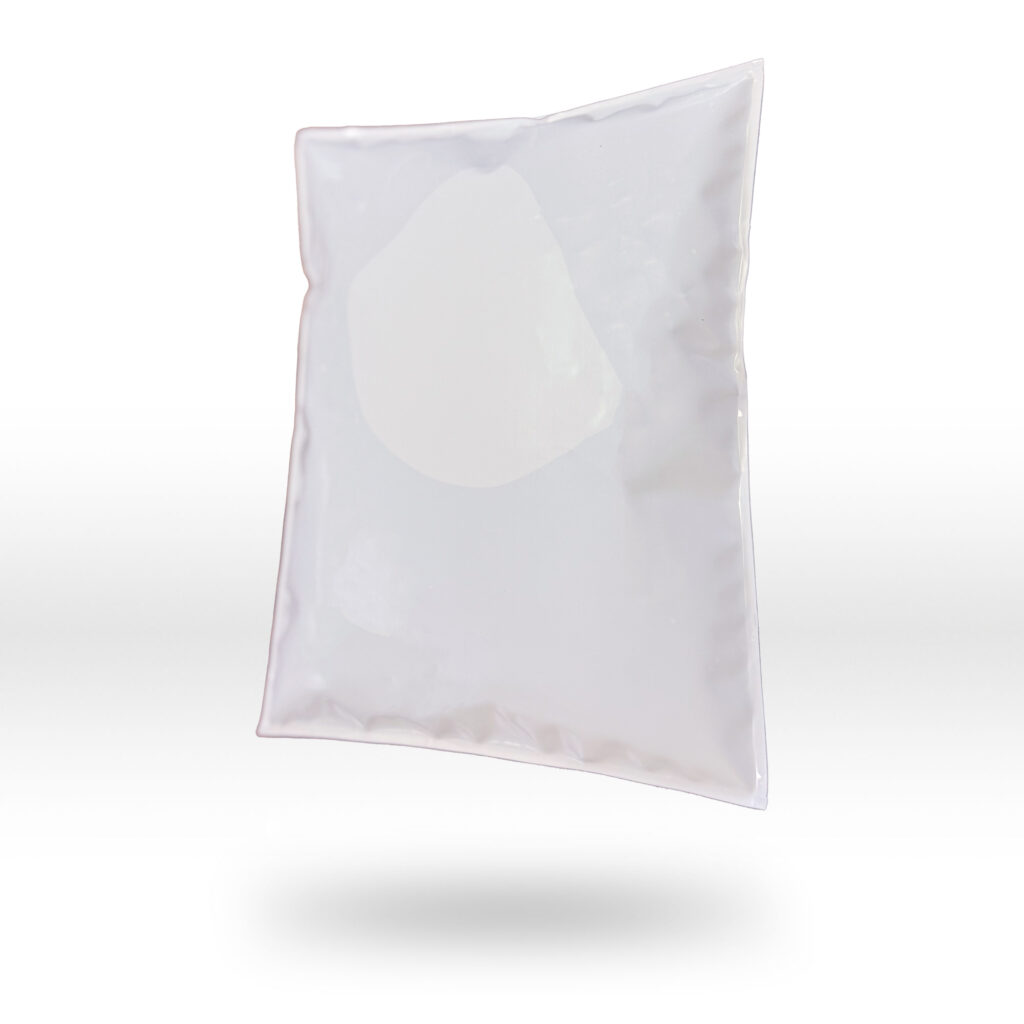
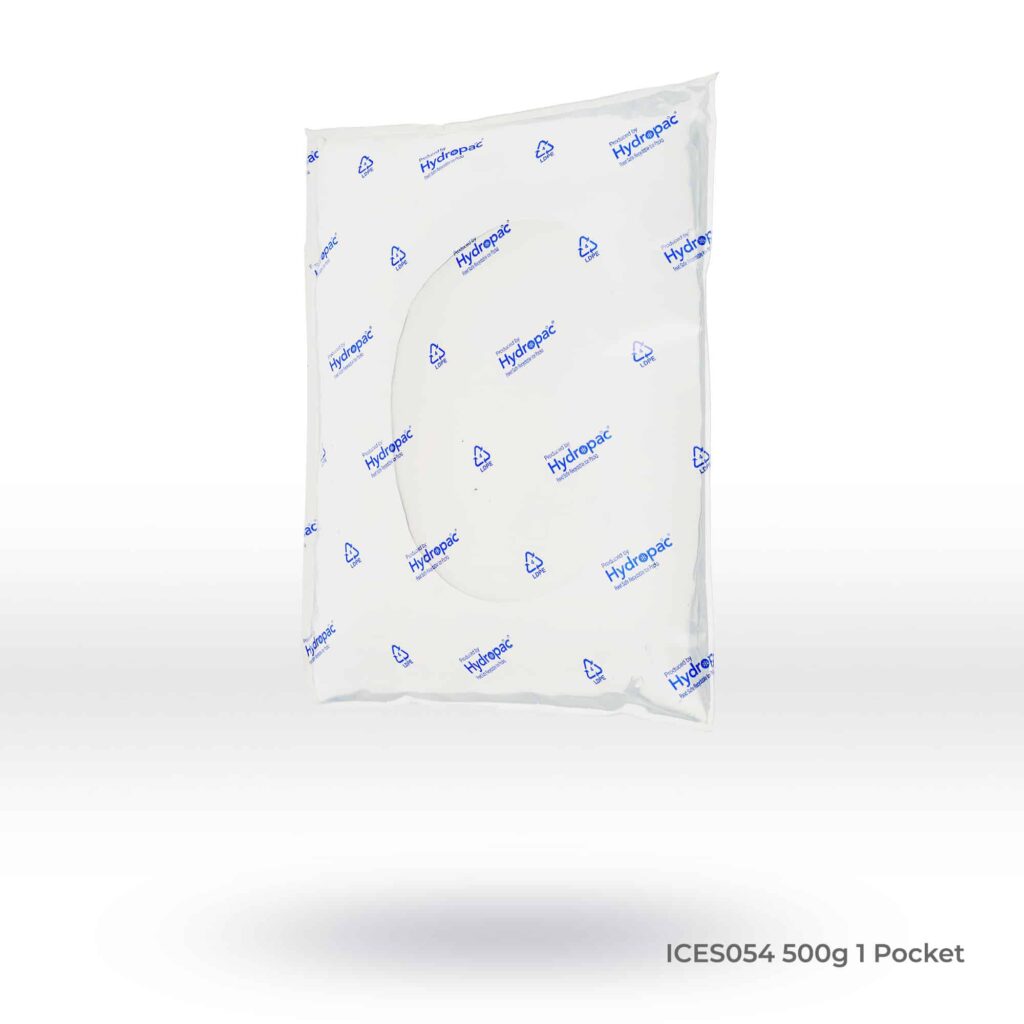
Coolant sustainability depends on performance, material type, disposal route and pack-out suitability. These Hydropac solutions are the strongest fit for businesses reviewing gel use, chilled delivery performance and lower-impact coolant choices.
A Better Way to Think About Coolant Sustainability
The Question Is Not “Is the Gel Pack Recyclable?” It Is “Is Gel Needed?”
Recyclable gel packs are often discussed as a material issue, but the more important question is whether gel is required for the shipment in the first place.
For many chilled routes, water-based ice packs can provide a simpler lower-impact option where the product, route and pack-out allow it. Water packs avoid SAP-based gel fill and create a clearer material story, while still supporting chilled temperature control when correctly matched to the application.
Gel packs still have a role. They may be needed where shape stability, thaw behaviour, handling requirements or specific pack-out performance make water less suitable. The decision should be based on thermal behaviour, not habit.
Hydropac helps customers review coolant choice as part of the full packaging system. That means assessing the product, payload, insulation, route, ambient profile and required performance before switching from gel to water.
Recyclable Gel Packs Need More Than a Recyclable Film
A recyclable gel pack claim should be looked at carefully. In many cases, the outer film may be the recyclable component, while the fill and disposal route need separate consideration.
For cold-chain packaging, the complete coolant system matters. A gel pack includes the film, the fill, the seal integrity, the conditioning process, the pack-out and the end-of-life route. If only one part of that system is recyclable, the claim needs to be clear enough that customers understand what can actually be recycled and what cannot.
This is especially important for food, healthcare and pharmaceutical shipments where sustainability cannot come at the cost of product protection. A coolant choice should reduce unnecessary impact without increasing temperature risk, leakage risk or disposal confusion.
That is why Hydropac treats recyclable gel packs as part of the wider Sustainability & Circular Packaging decision, rather than a standalone material claim.
Why Water Packs Are Becoming the Lower-Impact Default
Where the route and payload allow it, water packs are often the simpler lower-impact choice for chilled delivery. They use purified water rather than SAP-based gel, are food-safe, reusable and use LDPE-4 film that can be recycled through appropriate soft-plastic routes where accepted.
This gives water packs a clearer sustainability story. There is no gel fill to manage, fewer disposal complications and less need to explain what can and cannot be emptied, separated or recycled. For many chilled food, grocery and local delivery applications, that simplicity matters.
Water is not automatically right for every pack-out. It freezes solid and can behave differently from gel during thawing, packing and payload contact. But if water can deliver the required cold-chain performance, gel becomes harder to justify from a material and disposal perspective.
This is the practical shift Hydropac is encouraging: not “remove gel everywhere”, but move to water where possible and reserve gel for applications where its performance advantages are genuinely needed.
When Gel Packs Still Make Sense
A lower-impact coolant strategy should not ignore performance. Gel packs still have a valid role where the product, route or pack-out requires specific thermal behaviour.
Gel may be appropriate where shape stability matters, where the pack needs to conform around a payload, where thaw behaviour supports the required transit window, or where a customer has an established validated configuration that depends on gel performance. In healthcare and pharmaceutical applications, changes to coolant type may also need more careful review before implementation.
The key is to avoid using gel by default. A chilled route should be assessed against the product, payload, insulation and route profile before the coolant is selected.
A practical coolant decision should consider:
- whether water can meet the required temperature range and duration;
- whether gel performance is needed for the payload or pack-out;
- whether the disposal route is clear for the customer;
- whether the outer film has a realistic recycling route;
- whether EPR and recyclability pressure changes the commercial case;
- whether the system needs testing before changing coolant type.
For food businesses, this connects directly with Sustainable Food Packaging, where reducing packaging impact should never increase food waste or failed deliveries.
EPR Fees, Green Claims and Disposal Pressure
UK packaging EPR is changing how businesses look at packaging material choices. Plastic packaging has a reported 2025/26 base fee of £423 per tonne, and from 2026 fees will be modulated using recyclability as the indicator. Packaging with weaker recyclability may face higher relative costs, while more recyclable formats may benefit from lower modulation.
This does not create a simple rule that all gel packs should be removed. It does create a stronger commercial reason to question unnecessary gel use, unclear disposal routes and vague recyclable claims.
For SAP-based gel packs, the challenge is that the outer film and internal fill need to be understood separately. A recyclable film does not automatically make the whole coolant system easy to dispose of. If a customer cannot clearly understand what to do with the pack after use, the sustainability claim becomes weaker.
This is why Hydropac is positioning water packs as the simpler default where performance allows. A water-based coolant can reduce disposal complexity and make the packaging story easier to explain, while gel remains available where the application genuinely requires it.
Switching From Gel to Water Without Increasing Temperature Risk
Switching from gel to water should be treated as a cold-chain decision, not a like-for-like material swap. Water and gel behave differently inside an insulated pack-out, especially as they freeze, thaw and interact with the payload.
Before changing coolant type, the full system should be reviewed: insulation, coolant quantity, payload mass, ambient profile, route duration, packing process and handling conditions. If the existing system relies on gel behaviour, replacing it with water without testing may change performance.
Hydropac can support that transition through product selection and cold-chain optimisation. For some customers, the answer may be a direct move to water ice packs. For others, it may involve adjusting coolant quantity, changing pack placement, reviewing insulation or testing a revised pack-out.
This is also where wider transport impact matters. Reducing gel use may simplify disposal, but the system still needs to avoid over-engineering, failed deliveries and unnecessary replacement transport. The same operational thinking sits behind Reducing Carbon Impact in Temperature Controlled Transport.
Where insulation is also being reviewed, Recycled Insulated Packaging for Cold Chain Performance can help frame the next decision: reducing impact across the full packaging system, not just the coolant.
Contact us directly
We are ready to answer all your questions and help you find the perfect solution for your cold chain transport.
From issue to a customised cooling solution
In this way we help you to guarantee the quality and safety of food products under all circumstances.
Mass production
Transport
End user
FAQ’s about Recyclable Gel Packs
Are gel packs recyclable?
It depends on the specific gel pack. In some cases, the outer film may be recyclable through appropriate soft-plastic routes, but the internal gel fill and disposal process must be considered separately. A gel pack should not be described as fully recyclable unless the whole product and realistic recycling route support that claim.
Are water ice packs more sustainable than gel packs?
Water ice packs are often the simpler lower-impact option where the route and payload allow them to perform correctly. Hydropac water ice packs use purified water and LDPE-4 film, creating a clearer material and disposal story than SAP-based gel. However, water is not always the right technical choice, so performance should be reviewed before switching.
Can gel packs be disposed of down the sink?
Standard SAP-based gel packs should not be disposed of down the sink. Disposal instructions must be checked for the specific product. Some specialist coolant products may have different disposal guidance, but this should never be assumed for all gel packs.
When should I still use gel instead of water?
Gel may still be suitable where the pack-out requires shape stability, specific thaw behaviour, payload contact management or an established performance profile. It may also be relevant in some pharmaceutical or healthcare applications where the pack-out has been tested around gel. The correct choice depends on the product, route and required performance.
How do I switch from gel packs to water packs safely?
Switching should start with a review of the full packaging system. The product, payload mass, insulation, coolant quantity, ambient profile, route duration and packing process should all be considered. Where risk is higher, the revised pack-out should be tested before rollout to make sure water delivers the required thermal performance.
— Related articles —
 Eco Friendly
 Hydropac Support The Three R’s; Reduce, Reuse & Recycle
 Eco Friendly
 What are Phase Change Materials?
 Eco Friendly