
Reducing Carbon Impact in Temperature Controlled Transport
Reducing carbon impact in temperature controlled transport is not only a vehicle issue. It is not only a packaging material issue either.
In cold-chain distribution, the real impact is shaped by the full system: packaging weight, storage footprint, pallet density, coolant conditioning, freezer capacity, pack-out accuracy, route performance and product waste.
A lighter pack-out is not lower impact if it increases failed deliveries. A stronger pack-out is not lower impact if it adds unnecessary material, weight and transport volume without improving performance.
The objective is to create a temperature-controlled packaging system that protects the product with the least unnecessary impact. That means matching insulation, coolant, payload and route conditions before the shipment leaves.
For Hydropac customers, reducing carbon impact starts with a practical question:
Is the packaging system doing only what the route requires, or is it adding avoidable cost, weight and failure risk?
Custom chilled solutions for you
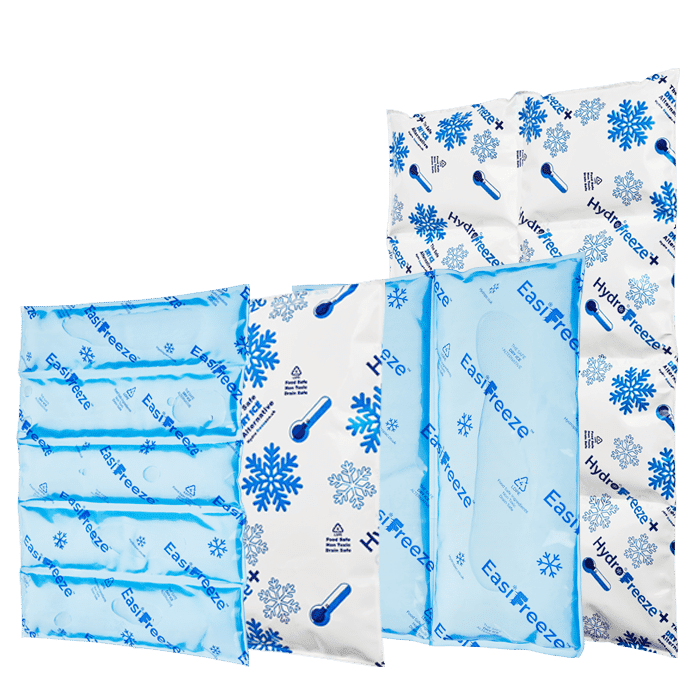
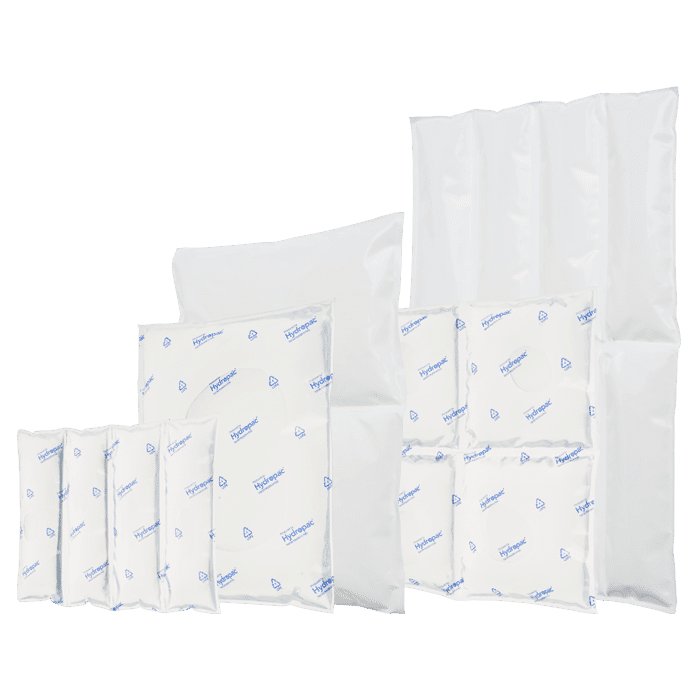
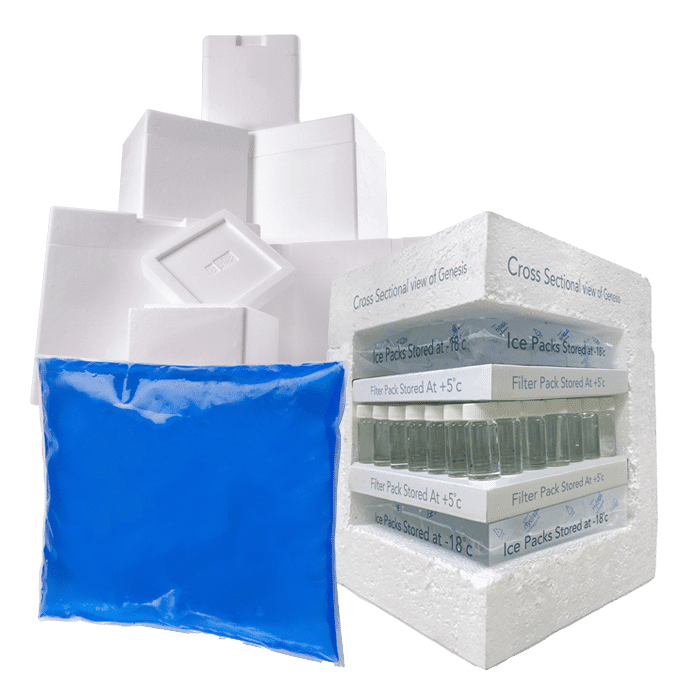
Hydropac offers every customer a customized solution for chilled and conditioned shipping. For example, we help a customer with limited freezing capacity to deliver gel packs frozen and ready to use, and we can manufacture almost all shapes and sizes of cooling elements. As a customer, you come first: we are here to help you.
Carbon Impact Is Built Into the Whole Cold-Chain System
Temperature controlled transport has more moving parts than a standard parcel journey. Products may need chilled or frozen protection, coolants may need conditioning, packaging may take up significant storage space and the route may expose the shipment to changing ambient conditions.
That makes carbon impact a system issue. The vehicle matters, but so does the way the product is packed, stored, shipped and protected from failure.
Transport refrigeration is only one part of the footprint
Refrigerated transport and cold-chain handling require energy. That is unavoidable where food, pharmaceutical or healthcare products need controlled temperatures. But for many shipments, the packaging system influences how efficiently that cold chain operates.
A well-matched passive pack-out can reduce unnecessary reliance on over-protection. A poorly specified pack-out can create the opposite problem: more coolant than needed, larger packaging than required, inefficient storage and greater risk of failed delivery.
Hydropac does not replace refrigerated logistics providers. The value sits in the passive packaging system that supports the journey. Insulation, coolant choice, pack-out configuration and route suitability all affect how efficiently a temperature-sensitive product moves through the network.
This is why sustainability in cold-chain packaging has to be treated as part of the wider Sustainability & Circular Packaging decision. Material choice matters, but it is only one part of the system.
Packaging weight and cube efficiency matter
Carbon impact is influenced by both weight and volume. A pack-out that is heavier than necessary can increase transport burden. A pack-out that is bulkier than necessary can reduce pallet density, increase storage demand and create inefficient movement before the product is even shipped.
This is especially important in high-volume chilled and frozen distribution. Small inefficiencies become significant when repeated across thousands of shipments. More insulation, larger cartons and excess coolant can all add impact if they are not justified by the route or product requirement.
But the opposite is also true. Removing material without understanding the route can create temperature risk. The goal is not simply to make packaging lighter. The goal is to make it right-sized.
A right-sized packaging system should protect the product, fit the route, reduce unnecessary material and avoid creating downstream waste.
Product waste can outweigh packaging savings
A failed cold-chain shipment creates more than a delivery problem. It can create product waste, replacement transport, additional packaging use, customer complaints and operational rework.
For food brands, this is one of the most important sustainability trade-offs. A packaging format that looks lower impact on material use can still create a worse total outcome if it increases product loss. Chilled food, frozen food, seafood, meat, dairy and meal kits all need packaging that supports product integrity through the full delivery journey.
This is why Sustainable Food Packaging should be assessed around both packaging waste and food waste. Reducing material is valuable only when the product still arrives in usable condition.
A lighter pack-out that creates more failed deliveries is not lower impact. It is impact shifted downstream.

How Packaging Decisions Reduce or Increase Transport Impact
The most practical way to reduce transport impact is to remove unnecessary inefficiency without increasing cold-chain risk. That requires looking beyond the packaging material and assessing how the full system behaves in operation.
Packaging can influence transport impact through weight, cube efficiency, storage, freezer demand, handling time and the likelihood of replacement shipments. Each of these drivers can be improved, but not in isolation.
The main carbon drivers in cold-chain packaging
A useful way to review a temperature-controlled packaging system is to identify where the packaging affects the wider logistics footprint.
|
Carbon driver |
Packaging decision that affects it |
What to optimise |
|---|---|---|
|
Parcel weight |
Insulation type, carton size and coolant quantity |
Right-sized protection |
|
Pallet density |
Flat-packed liners, bulky boxes or rigid formats |
Storage and inbound logistics |
|
Freezer demand |
Coolant type, quantity and conditioning process |
Freezer capacity and cycle time |
|
Product waste |
Thermal performance and route suitability |
Pack-out testing and validation |
|
Replacement shipments |
Failed delivery and excursion risk |
Process control and route-fit packaging |
|
Warehouse footprint |
Stockholding volume and pack format |
Compact storage where suitable |
|
Pack-out labour |
Assembly time and operator consistency |
Simple, repeatable configurations |
The best result is rarely achieved by changing one variable. Reducing coolant may affect temperature performance. Reducing insulation may affect route suitability. Changing packaging format may affect storage, packing speed or customer disposal.
That is why cold-chain packaging should be reviewed as a complete system.
Right-sized protection reduces unnecessary weight
Over-engineering is common in cold-chain packaging because it feels safer. More insulation, more coolant and larger boxes can create a bigger performance buffer, but they can also add unnecessary material, weight and storage demand.
Under-protection creates the opposite risk. The shipment may be lighter, but if the system fails, the impact can multiply through product waste and replacement transport.
Right-sized protection sits between those two extremes. It means selecting insulation, coolant and pack-out configuration around the product, payload, route duration and ambient profile. A local chilled route may need a different system from a 48-hour courier shipment. A frozen parcel may need a different coolant and insulation strategy from a chilled food box.
Hydropac’s role is to help customers find that balance through product selection, pack-out review and cold-chain optimisation.
Storage and pallet density affect upstream transport
Transport impact starts before the customer receives the parcel. Packaging has to be manufactured, stored, delivered into the fulfilment site, picked, packed and shipped.
Bulky insulated formats can require more warehouse space and more inbound transport capacity. Compact liner systems can improve storage efficiency where the route and payload allow them. However, compactness alone is not enough. The system still has to protect the product.
This is where Recycled Insulated Packaging becomes relevant. Recycled or recyclable insulation should not be judged only by material input or end-of-life. It should also be assessed by storage efficiency, pack-out practicality and thermal performance.
A lower-impact insulated system is one that reduces waste without weakening the route.
Coolant choice affects freezer capacity and handling
Coolants also influence transport impact. Water packs, gel packs, hard-shell coolants and frozen alternatives each affect freezing time, freezer capacity, handling labour and pack-out process.
Using more coolant than necessary can increase freezer demand, packing complexity and shipment weight. Using too little coolant can increase temperature failure risk. Changing from gel to water may simplify the material and disposal story, but the system still needs to meet the temperature requirement.
That is why coolant choice should be assessed as part of the full packaging system. For chilled routes, Recyclable Gel Packs and Lower-Impact Coolant Choices is an important supporting decision: use water where possible, use gel where necessary and validate the change before rollout.
Failed deliveries are the carbon multiplier
The biggest avoidable impact often comes from failure. If a chilled or frozen shipment cannot be used, the business may need to replace the product, send another parcel, use additional packaging, recondition more coolant and spend more labour resolving the issue.
That is why carbon reduction in temperature controlled transport has to include performance control. A system that looks lower impact at dispatch can become higher impact if it increases product waste or replacement shipments.
Hydropac’s Cold Chain Optimisation support is built around this practical reality. By reviewing route conditions, packaging configuration, coolant use, pack-out consistency and testing requirements, businesses can reduce unnecessary impact without making cold-chain performance an assumption.
Reducing carbon impact does not start with the lightest package.
It starts with the most efficient system that still protects the product.