
Trusted by leading companies
Recycled insulated packaging
Recycled and recyclable insulation systems for cold-chain packaging, selected around route performance and product protection
— Built for Recycled Content, Recyclability and Real Cold-Chain Performance —
Recycled Insulated Packaging Has to Do More Than Sound Sustainable
Recycled insulated packaging can help reduce reliance on virgin materials and support more circular packaging decisions, but recycled content alone does not make a cold-chain system suitable. Temperature-controlled packaging still has to protect the product through storage, packing, handling, transport and delivery.
A lower-impact insulation system must be assessed against real distribution conditions. Chilled food, frozen parcels, pharmaceutical products and healthcare shipments can all place different demands on thermal resistance, cushioning, moisture protection, pack-out consistency and end-of-life. If recycled or recyclable insulation fails to maintain the required temperature range, the environmental benefit can be lost through product waste, replacement shipments and operational disruption.
Hydropac supports businesses with recyclable liner systems, paper-based insulation, performance-led insulated formats and cold-chain optimisation support. The aim is to help customers reduce packaging impact while keeping product protection, storage efficiency and route suitability at the centre of the decision.
Discover Recycled and Recyclable Insulated Packaging Solutions
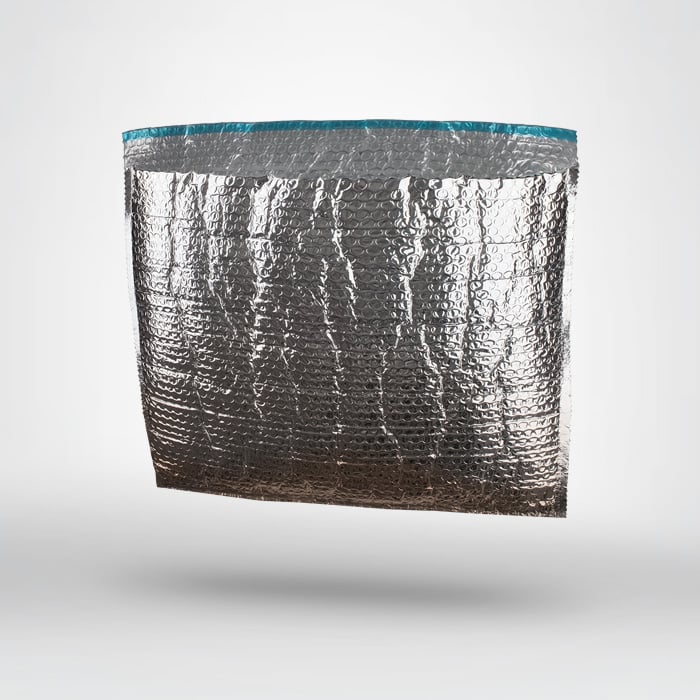
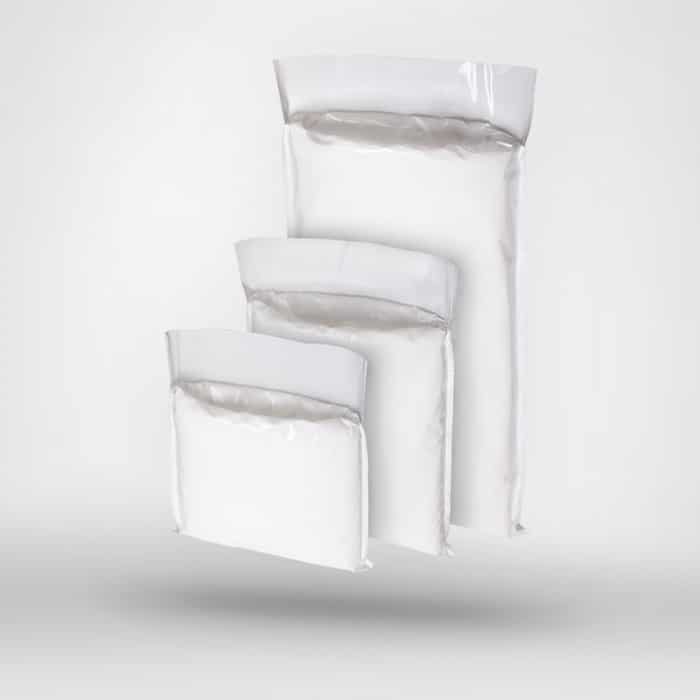
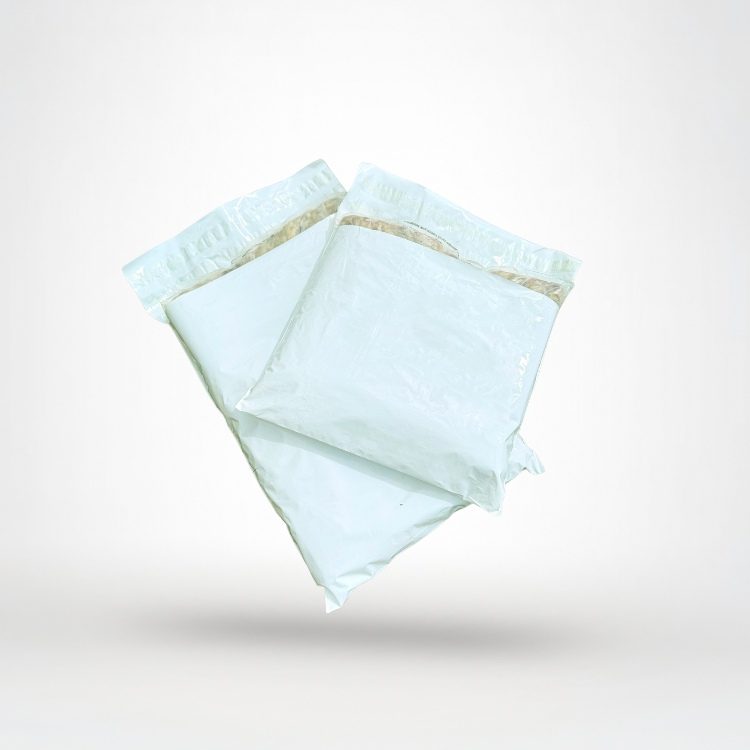
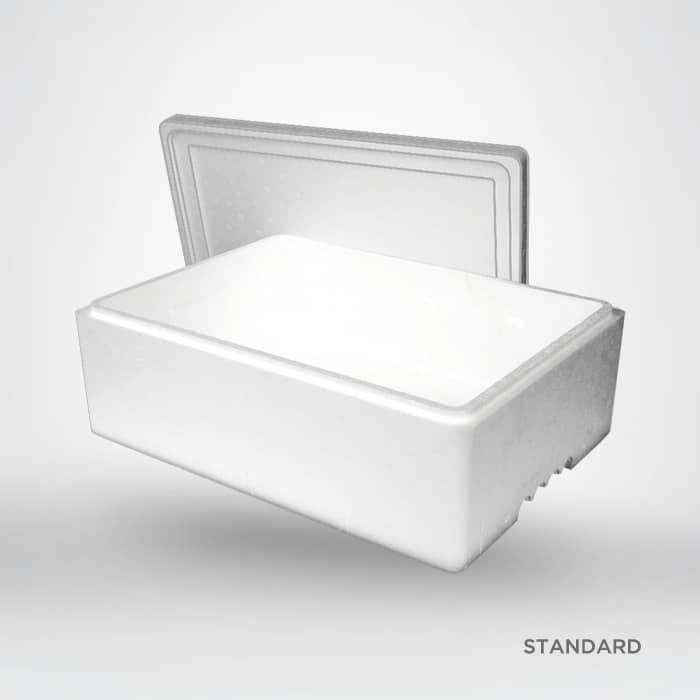
Lower-impact insulation needs to be selected around the product, route and pack-out. These Hydropac solutions are the strongest fit for businesses reviewing recycled-content, recyclable and performance-led insulated packaging options.
Recycled Materials Still Have to Perform
Recycled Content Does Not Replace Thermal Testing
Recycled content can be a valuable part of a lower-impact packaging strategy, but it does not tell you whether the system will perform on a real cold-chain route.
Insulation has to be judged by how it behaves around the product, coolant, payload, ambient exposure and handling conditions. A recycled or recyclable liner may be the right choice for one chilled courier route and unsuitable for another. Material story matters, but it cannot replace thermal performance.
Hydropac helps customers assess insulated packaging as a complete system. That means considering thermal resistance, cushioning, storage efficiency, pack-out process, closure method and end-of-life route together. The objective is not just to choose a better-sounding material. It is to reduce impact without making product protection an assumption.

Recycled Insulated Packaging Starts With Performance
Recycled insulated packaging should start with the same question as any temperature-controlled system: will it protect the product through the real route?
In cold-chain distribution, insulation is not just a sustainability claim. It controls heat transfer, supports payload protection and influences how the pack-out behaves during handling, storage and transport. A recycled-content material or recyclable liner only creates value if the product still arrives within the required condition.
This is why recycled insulated packaging belongs within a wider Sustainability & Circular Packaging framework. The material input matters, but so do thermal performance, product waste, end-of-life route and operational fit.
For Hydropac customers, the decision is practical. A lower-impact insulated system should reduce unnecessary material impact without increasing temperature risk, pack-out complexity or failed delivery costs.
Recycled, Recyclable and Circular Are Not the Same Thing
Recycled, recyclable and circular are often used as if they mean the same thing. In packaging decisions, they are different.
Recycled content refers to material that has already been recovered and reused in a new product. Recyclable packaging refers to whether the packaging can be recycled after use through a realistic material route. Circular packaging goes further by considering how the material is used, recovered, reused or recycled across the full system.
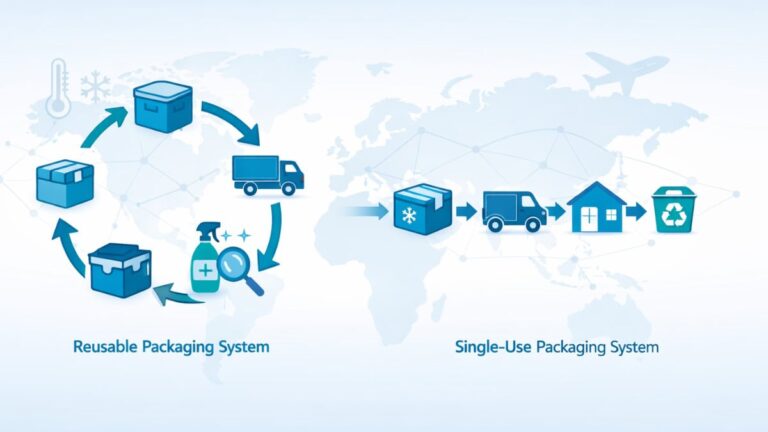
That distinction matters in cold-chain packaging. A product may contain recycled content but have limited end-of-life options. Another may be recyclable, but only where the user has access to the correct collection route. A reusable system may sound circular, but only work if return logistics, cleaning and loss rates are controlled.
This is also why environmental claims need to be specific. For insulated packaging, a claim should explain what part of the system is recycled or recyclable, how it should be handled after use and what performance conditions it has been selected for.
Matching Insulation to the Cold-Chain Route
Recycled or recyclable insulation needs to be selected around the shipment, not around the claim. A liner, postal pocket, EPS box or paper-based insulation format may each be suitable in different conditions.
A route-fit insulation decision should consider:
- chilled or frozen temperature requirement;
- payload size, weight and thermal mass;
- route duration and ambient profile;
- courier handling and compression risk;
- moisture exposure or condensation;
- storage footprint and pallet efficiency;
- pack-out speed and operator consistency;
- end-user disposal or recycling route.
This is especially important in food delivery, where sustainability decisions need to account for both packaging waste and product waste. A lower-impact material that increases food loss is not a better system. That is why Sustainable Food Packaging has to be assessed around product protection, shelf life and delivery performance, not packaging material alone.
The same principle applies to healthcare and pharmaceutical shipments where the performance requirement may be tighter, the payload value higher or the need for testing stronger.
Storage Efficiency Is Part of Sustainability
Insulated packaging affects more than the parcel itself. It also affects warehouse space, inbound transport, pallet density, fulfilment speed and cost-to-serve.
Bulky packaging can increase storage requirements and transport movements before it is even used. A compact liner system may reduce storage pressure and improve fulfilment efficiency where the route and product profile are suitable. However, the most compact option is not automatically the best option if it does not provide enough protection.
This is where recycled and recyclable liner systems can be commercially useful. They may support lower material impact, reduce storage burden and improve pack-out efficiency compared with bulkier alternatives in the right application. But the route still has to come first.
Hydropac’s role is to help customers avoid both extremes: over-engineered packaging that adds unnecessary material and under-specified packaging that increases failure risk. The wider impact of packaging weight, pallet density, storage and failed deliveries sits closely alongside Reducing Carbon Impact in Temperature Controlled Transport.
Insulation and Coolant Must Be Assessed Together
Insulation does not work in isolation. The coolant, payload, internal air space and pack-out sequence all affect thermal performance.
A recyclable liner may perform well with one coolant configuration and poorly with another. A recycled-content insulation format may require changes to coolant quantity, payload placement or closure method. A chilled food shipment may suit water ice packs, while a longer or more demanding route may require a different cooling strategy.
This is why insulation decisions often connect directly with coolant decisions. If a business is reviewing recycled insulated packaging, it should also ask whether the coolant system still makes sense. In some chilled applications, Recyclable Gel Packs and Lower-Impact Coolant Choices may help identify whether water, gel or another coolant format is the better match for the revised pack-out.
A lower-impact insulation system only works when the full configuration is aligned.
When Recycled Insulation Needs a Deeper Technical Review
Some recycled or recyclable insulation decisions are straightforward. Others need a more technical review before rollout.
This is especially true where the shipment is high value, the route is long, the ambient profile is variable or the product has narrow temperature requirements. Recycled content can affect material behaviour, and any insulation format should be assessed for thermal resistance, thickness, durability, moisture response, puncture resistance and closure performance.
For lower-risk routes, a standard product configuration may be enough. For more demanding chilled, frozen, pharmaceutical or healthcare shipments, testing or cold-chain optimisation may be needed before changing material type.
Hydropac’s Cold Chain Optimisation support helps customers assess these trade-offs in real operating conditions. Where recycled materials are being considered in more detail, Recycled Insulation Materials and Performance Trade-Offs is the natural technical extension of this page, focusing on how recycled insulation should be evaluated before it becomes part of a live pack-out.
Contact us directly
We are ready to answer all your questions and help you find the perfect solution for your cold chain transport.
From issue to a customised cooling solution
In this way we help you to guarantee the quality and safety of food products under all circumstances.
Mass production
Transport
End user
FAQ’s about Recycled Insulated Packaging
What is recycled insulated packaging?
Recycled insulated packaging uses recycled-content materials, recyclable materials or lower-impact insulation formats to help protect temperature-sensitive goods during storage and transport. In cold-chain applications, the insulation still needs to maintain thermal performance, protect the payload and suit the route, pack-out and end-of-life process.
Is recycled insulated packaging the same as recyclable packaging?
No. Recycled content refers to material that has already been recovered and used again in a new product. Recyclable packaging refers to whether the packaging can be recycled after use through a suitable route. A cold-chain packaging system may be recycled, recyclable, both or neither depending on the material and product design.
Can recycled insulated packaging be used for chilled food delivery?
Yes, where the insulation, coolant and pack-out are matched to the product and route. Chilled food delivery needs packaging that protects product quality and shelf life, so the system should be assessed against payload size, route duration, ambient exposure and courier handling. Higher-risk routes may require testing before rollout.
Does recycled insulation perform as well as standard insulation?
Not automatically. Performance depends on material type, thickness, structure, moisture exposure, closure method, payload and route conditions. Recycled or recyclable insulation should be assessed against the required temperature range and distribution model before replacing an existing pack-out.
How should I choose recycled insulated packaging?
Start with the product and route. Consider the required temperature range, payload mass, transit duration, ambient exposure, handling conditions, storage footprint and end-of-life route. Then select the insulation and coolant configuration that reduces impact without increasing temperature risk or product waste.
— Related articles —
 Eco Friendly
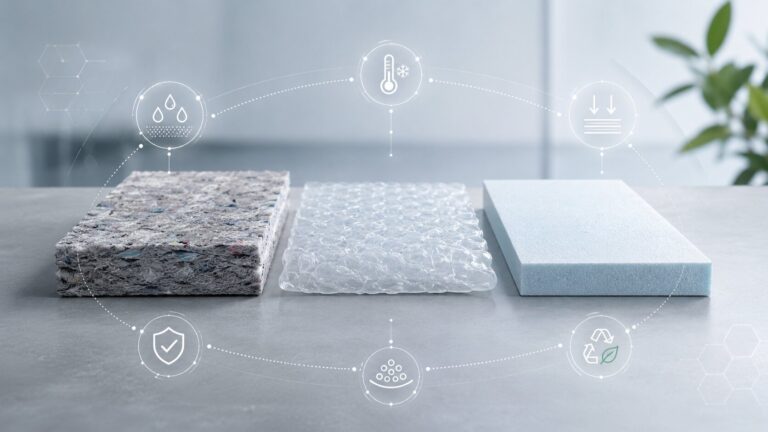
 Recycled Insulation Materials and Performance Trade-Offs
 Eco Friendly
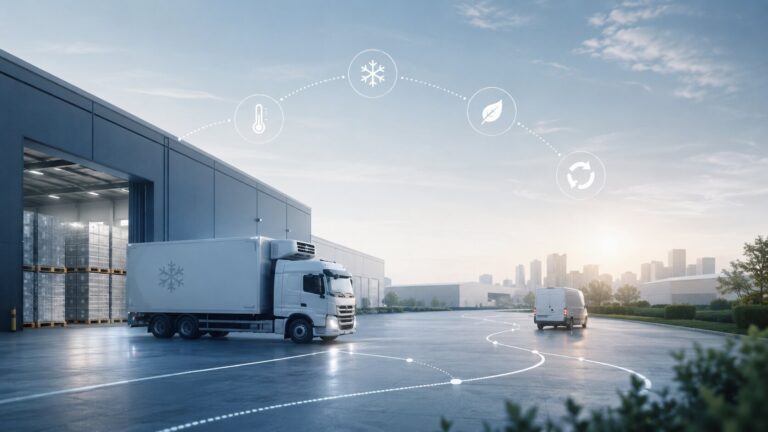
 Reducing Carbon Impact in Temperature Controlled Transport
 Eco Friendly