
Recycled Insulation Materials and Performance Trade-Offs
Recycled insulation is not a shortcut.
If the material changes, the cold-chain behaviour can change with it.
That matters because insulated packaging is not just a sustainability claim. It is part of the temperature-control system. The material has to slow heat transfer, protect the payload, survive handling and still support a realistic end-of-life route after use.
Recycled content can reduce reliance on virgin materials, but it does not automatically guarantee thermal performance. In chilled, frozen, food, healthcare or pharmaceutical distribution, a material swap can affect insulation thickness, moisture resistance, compression behaviour, cushioning and pack-out consistency.
The question is not whether recycled insulation sounds better.
The question is whether it still protects the product under the route conditions it will actually face.
Custom chilled solutions for you
Hydropac offers every customer a customized solution for chilled and conditioned shipping. For example, we help a customer with limited freezing capacity to deliver gel packs frozen and ready to use, and we can manufacture almost all shapes and sizes of cooling elements. As a customer, you come first: we are here to help you.
Recycled Content Does Not Guarantee Cold-Chain Performance
Recycled insulation materials can be part of a better packaging strategy, but they should never be treated as a like-for-like replacement without review.
In temperature-controlled packaging, performance depends on the full pack-out: insulation, coolant, payload, internal air space, closure method, ambient exposure and handling conditions. Changing the insulation material can change how the whole system behaves.
That is why recycled insulation sits within the wider logic of Sustainability & Circular Packaging. Lower-impact materials are valuable only when they reduce environmental impact without increasing temperature risk or product waste.
Thermal resistance is only one part of the pack-out
Insulation slows heat transfer, but it does not work alone. The same insulation material can perform differently depending on the coolant, payload size, carton fit, closure method and external conditions.
A recycled or recyclable insulation system may work well on a short chilled route but be unsuitable for a longer courier lane or a more temperature-sensitive payload. The material cannot be judged only by what it is made from. It has to be judged by how it performs in the system.
A lower-impact insulation choice that fails thermally is not a better system. It simply moves the impact from packaging into product loss, replacement shipments and operational disruption.
Compression and handling can change the result
Cold-chain packaging does not move through perfect conditions. Parcels are stacked, handled, compressed, loaded, unloaded and sometimes left in uncontrolled environments before delivery.
This matters because insulation performance can be affected by structure and thickness. If a material compresses too easily, loses shape or allows the payload to move inside the pack, the real-world result may differ from the expected result.
Cushioning also matters. The insulation may need to protect both temperature and product condition. For food, this could mean preventing product damage. For healthcare or pharmaceutical shipments, it may mean protecting a higher-value payload where handling risk is more critical.
Moisture can expose weak material choices
Moisture is one of the most common pressure points in cold-chain packaging. Chilled and frozen shipments can create condensation. Wet fish, seafood, meat, dairy and fresh produce can add further moisture load.
A recycled fibre or paper-based insulation format may need moisture-resistant design to remain effective. A plastic-based liner may handle moisture differently but may create different questions around recyclability, material streams and end-of-life.
This is why Sustainable Food Packaging cannot be judged by material impact alone. Food packaging still has to protect shelf life, product quality and delivery performance. If moisture weakens the pack-out or increases product waste, the sustainability claim weakens with it.

How to Assess the Trade-Off Before Switching Materials
A recycled insulation material should be assessed before it becomes part of a live pack-out. The aim is not to block lower-impact materials. The aim is to stop sustainability decisions from creating avoidable cold-chain risk.
The best approach is to compare the material against the route, product and pack-out conditions it will actually face.
Compare the material against the route
A useful review should look at more than recycled content percentage or recyclability language. The key question is how the material behaves in the complete system.
|
Performance variable |
Why it matters |
What to check |
|---|---|---|
|
Thermal resistance |
Controls heat transfer through the pack |
Temperature profile over the intended route |
|
Thickness |
Affects insulation value and parcel size |
Payload space, carton fit and courier dimensions |
|
Compression |
Can reduce structure and performance |
Stacking, handling and recovery after pressure |
|
Moisture response |
Affects structure, hygiene and end-of-life |
Condensation, leakage and wet payload exposure |
|
Cushioning |
Protects payload and pack integrity |
Drop, vibration and internal movement |
|
Closure method |
Affects thermal leakage |
Seals, folds, self-seal strips or outer cartons |
|
End-of-life |
Determines claim credibility |
Realistic recycling, reuse or disposal route |
This is where many material swaps fail. The new insulation may look better from a sustainability perspective, but if it changes carton size, packing speed, coolant quantity or thermal behaviour, the whole system needs to be reviewed.
Recycled materials still need pack-out validation
A material change is not a validation.
If a business switches from one insulation format to another, the previous pack-out should not automatically be assumed to work. Coolant quantity may need to change. Payload placement may need to change. Air space may need to be controlled differently. The outer carton or closure method may also affect performance.
For low-risk routes, this may be a straightforward review. For longer chilled routes, frozen shipments, pharmaceutical payloads or high-value products, testing may be needed before rollout.
This is the technical extension of Recycled Insulated Packaging. The commercial case for recycled or recyclable insulation is strongest when it is backed by route-fit performance, not just material language.
The right answer may be a hybrid system
There is rarely one perfect insulation material for every cold-chain application.
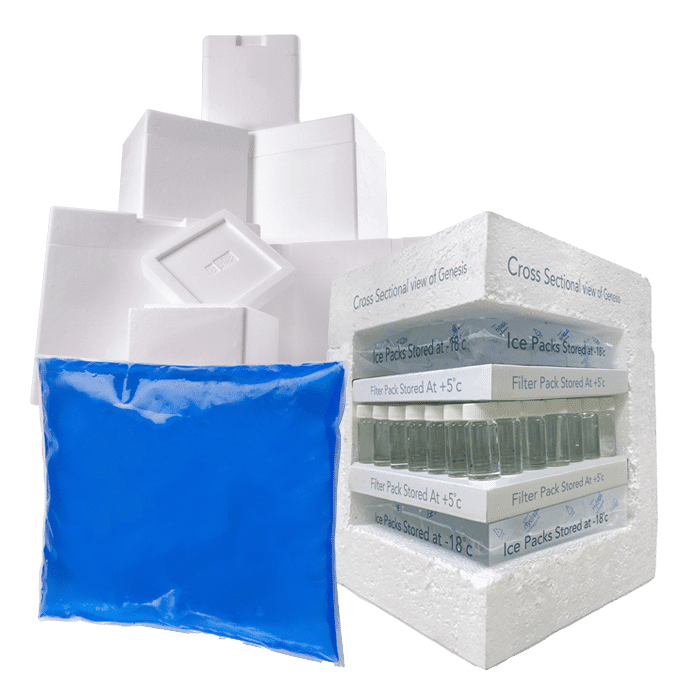
A recyclable liner may be suitable for one chilled food box. A paper-based insulation format may work well for another route. EPS may still be appropriate where moisture resistance, robustness or stronger thermal protection is required. A reusable format may work in a closed-loop system, but not in an open courier network.
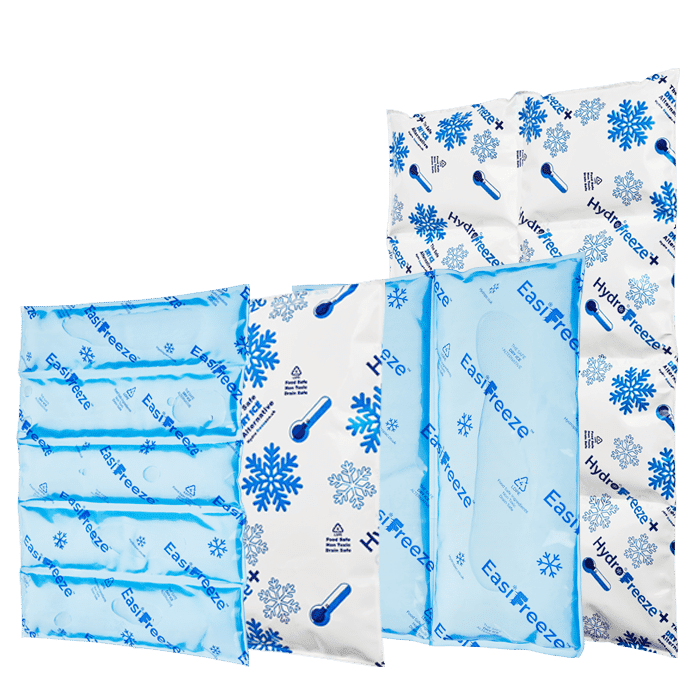
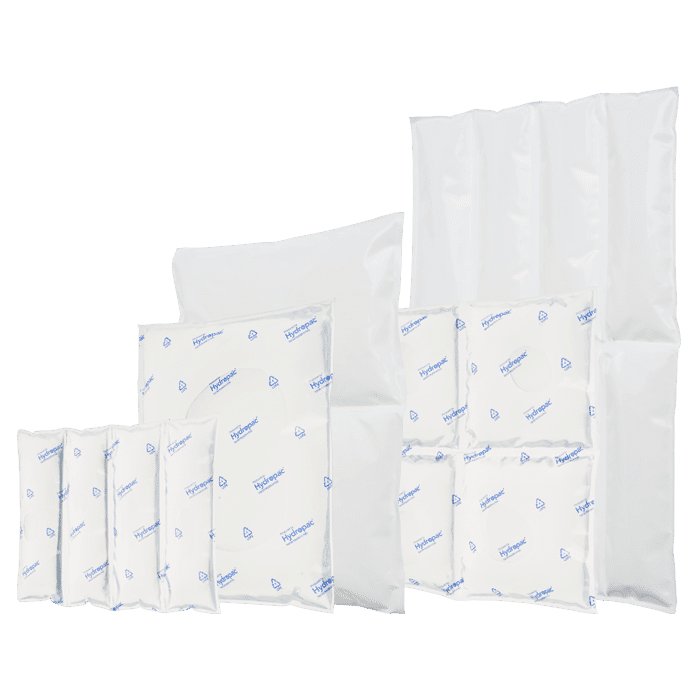
The coolant also changes the result. A recycled or recyclable insulation choice may perform differently with water packs, gel packs, hard-shell coolants or frozen alternatives. That is why insulation decisions often connect with Recyclable Gel Packs and Lower-Impact Coolant Choices. The insulation and coolant need to work together, not as separate sustainability decisions.
Material choice should reduce risk, not just impact
Recycled insulation materials have an important role in lower-impact cold-chain packaging. But the material must reduce impact without reducing control.
If the pack-out becomes harder to repeat, less moisture-resistant, easier to compress, harder to recycle or weaker thermally, the sustainability benefit may disappear in operation.
Hydropac’s Cold Chain Optimisation approach helps customers review these trade-offs before they become live shipment problems. That means assessing insulation, coolant, payload, route, handling and end-of-life together.
A recycled insulation material is only a better choice if it still protects the product, survives the route and has a credible end-of-life.
Lower impact cannot mean lower control.