
Trusted by leading companies
Temperature controlled packaging
Passive packaging systems engineered for consistent temperature control
— Built for Performance, Compliance and Cost Control —
Temperature Control in Complex Distribution Environments
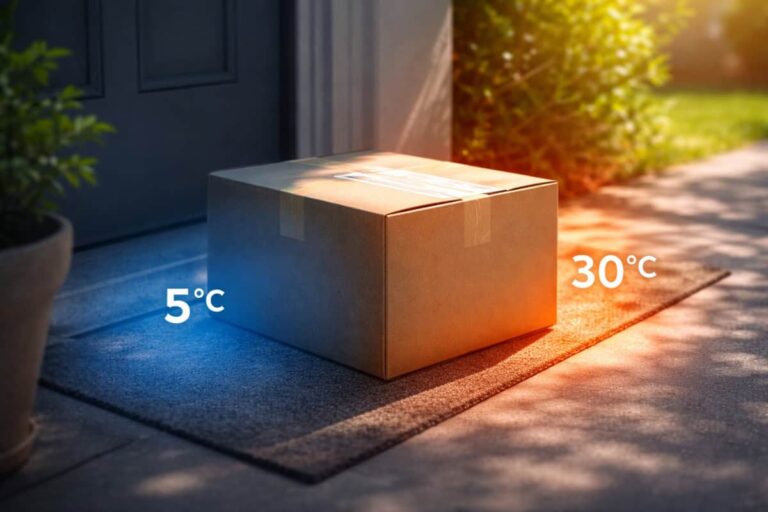
Temperature controlled packaging is a critical control point within any cold chain. For food producers, pharmaceutical manufacturers and high-volume distributors, maintaining a defined temperature range is essential to protect product integrity, meet regulatory requirements and control distribution cost. Cold chains operate under constant variability, with exposure to fluctuating ambient conditions, multiple handling stages and inconsistent transit times. This creates cumulative thermal stress and increases the risk of temperature deviation over time. Packaging is the only consistent factor across the journey and must manage heat transfer, stabilise internal conditions and perform reliably in real-world environments. Where systems are not aligned to the actual route profile, temperature excursions and unnecessary cost quickly follow.
Discover Temperature controlled packaging
Hydropac isn’t just packaging; it’s a revolution of quality, innovation, and sustainability. Join us on this exciting journey to redefine packaging excellence.
A Structured Approach to Packaging Performance
Cold Chain Performance Audit
Temperature controlled packaging cannot be evaluated in isolation. Performance is defined by how systems are packed, handled and exposed to real distribution conditions. Even well-specified materials can fail when processes are not aligned with how a business actually operates.
In practice, small operational differences often drive temperature deviation. Variations in refrigerant conditioning, pack-out consistency or staging time can significantly reduce performance. As every operation works differently, these factors require a tailored packaging approach rather than a standard solution.
A cold chain performance audit assesses how packaging performs across the full journey, identifying where performance is lost and where systems need to be adjusted to match real operational demands. This enables more reliable temperature control while avoiding unnecessary cost and over-specification.
Explore Temperature Controlled Packaging Solutions
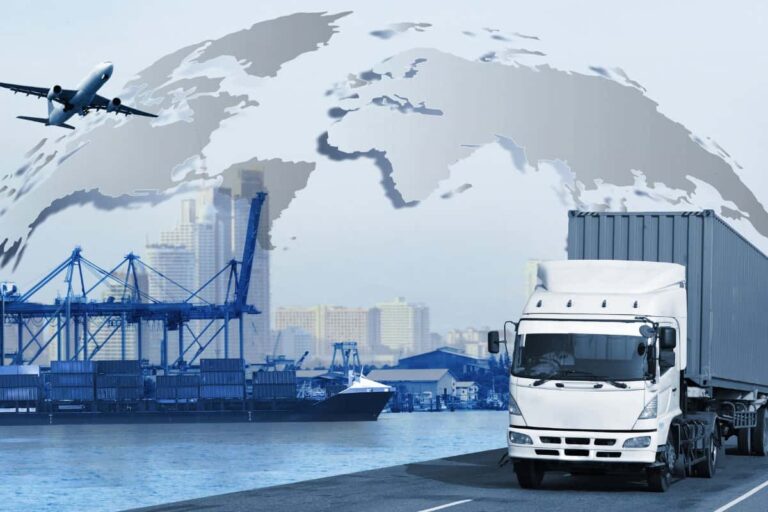
Temperature controlled packaging covers a range of system types, each designed to manage specific distribution challenges. From parcel delivery to complex logistics networks, selecting the right approach depends on transit conditions, product sensitivity and operational requirements.
Explore the key areas below to understand how different temperature controlled solutions are applied across food, pharmaceutical and high-volume distribution.
Temperature controlled courier boxes
Temperature sensitive shipping
Temperature controlled logistics
Temperature controlled shipping
Packaging Systems Engineered for Real-World Performance
Temperature controlled packaging is not defined by individual materials, but by how systems perform under real distribution conditions. Effective solutions combine insulation, refrigerants and pack configuration to manage heat transfer over a defined transit window.
Hydropac systems are developed around specific operational requirements, from high-volume parcel delivery to more demanding cold chain applications where tighter temperature control and longer durations are required.
Flexible Insulation Systems for Parcel and E-commerce Distribution
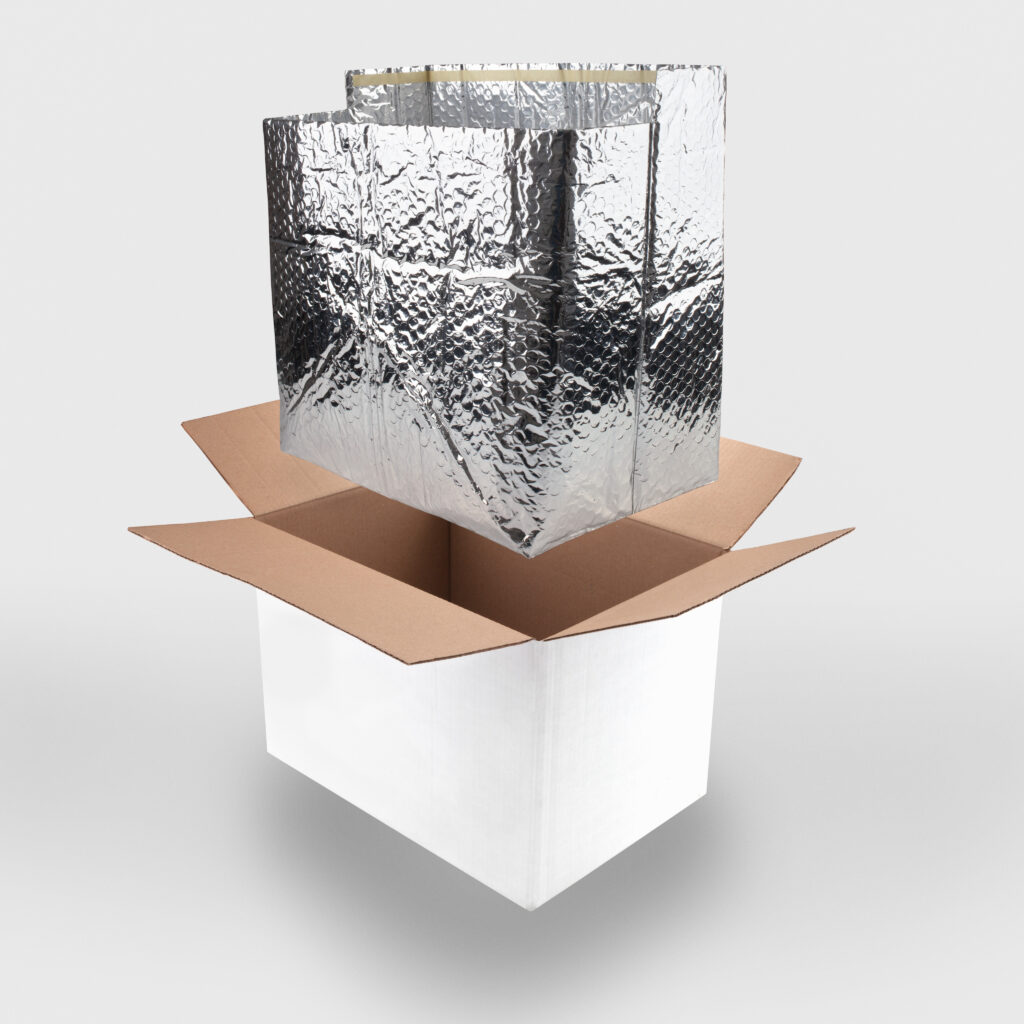
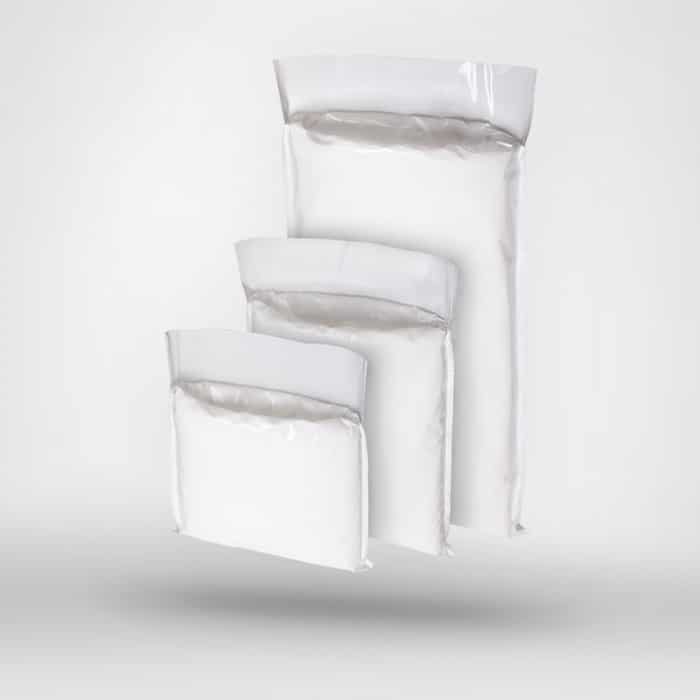
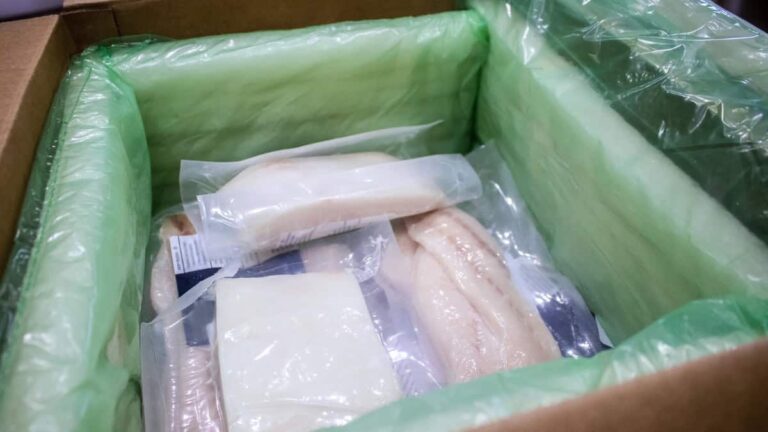
Flexible liner systems are widely used due to their ability to balance thermal performance with operational efficiency. Hydropac systems such as ReflectiveAir and RecycleAir are built using different insulation principles to achieve this.
ReflectiveAir uses metallised foil laminates to reduce emissivity and reflect radiant heat away from the payload, while RecycleAir incorporates double bubble insulation with LDPE layers to increase thermal resistance and provide additional cushioning. These systems are supplied in flat-packed formats with self-seal designs, reducing assembly time and improving pack-out consistency.
Under controlled testing, liner-based systems have demonstrated the ability to:
maintain chilled ranges (2–8°C) for 24+ hours under peak UK summer conditions
extend performance up to 96 hours in winter profiles, depending on configuration
support 48-hour chilled and 24-hour frozen applications in 3D pack formats
In addition, their lightweight construction allows for significantly improved logistics efficiency, with up to 700–1500 liners per pallet, reducing storage and inbound transport costs compared to rigid alternatives.
Rigid and High-Performance Packaging Systems
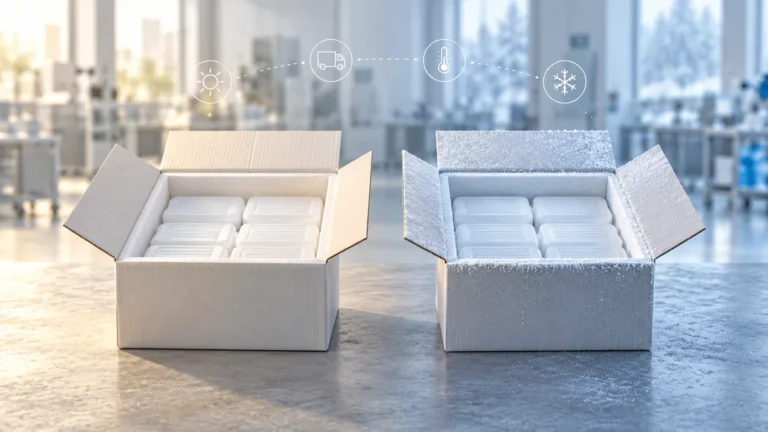
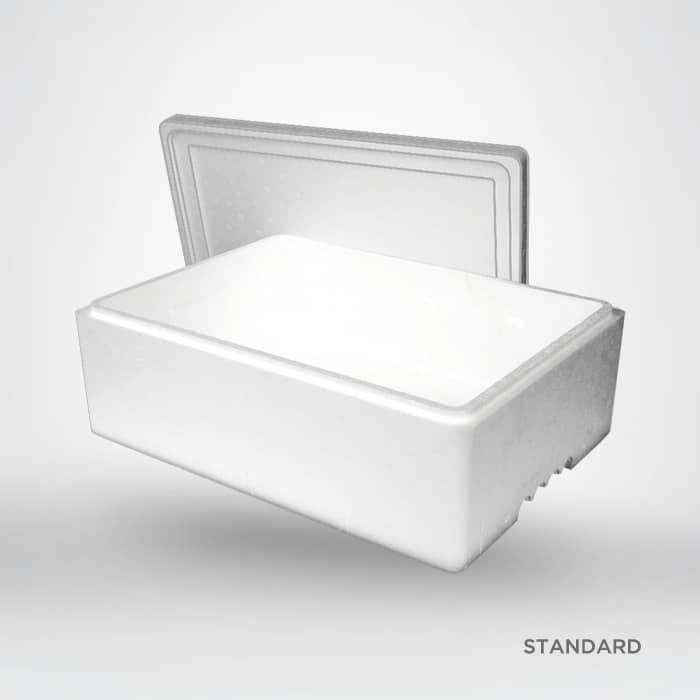
Rigid insulated systems, including polystyrene containers and insulated box formats, provide higher levels of thermal resistance due to material density and structure. These systems are designed to reduce conductive heat transfer and maintain more stable internal conditions over extended durations.
They are typically used where:
transit durations exceed standard parcel delivery windows
ambient exposure is higher or less predictable
temperature tolerances are tighter, such as 2–8°C pharmaceutical shipments
Rigid systems offer increased performance margin, particularly in higher-risk scenarios, but introduce trade-offs in volumetric weight, storage footprint and material cost. As a result, they are most effective when aligned to specific route profiles where additional protection is required.
Integrated Packaging Systems and Configuration
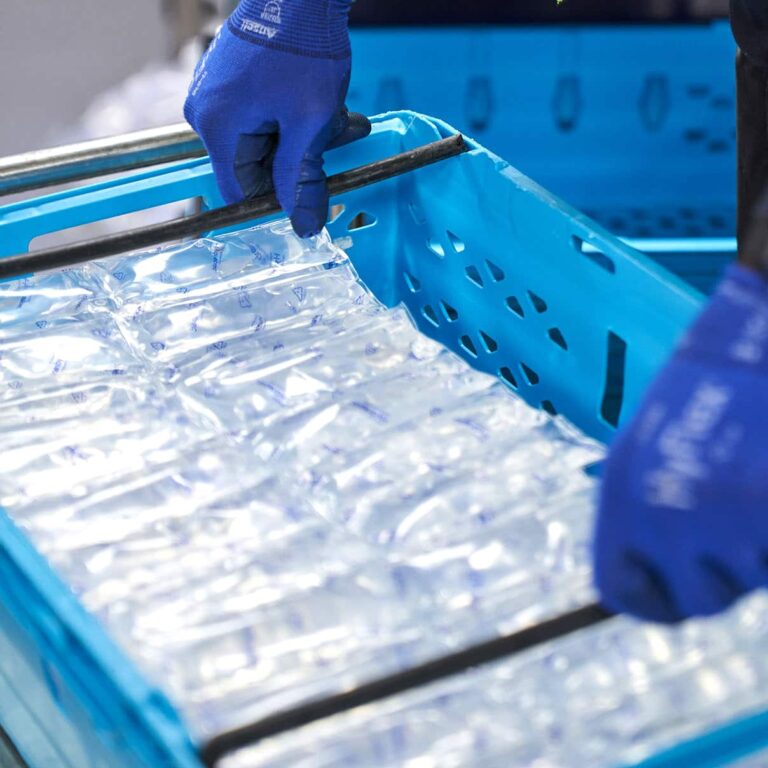
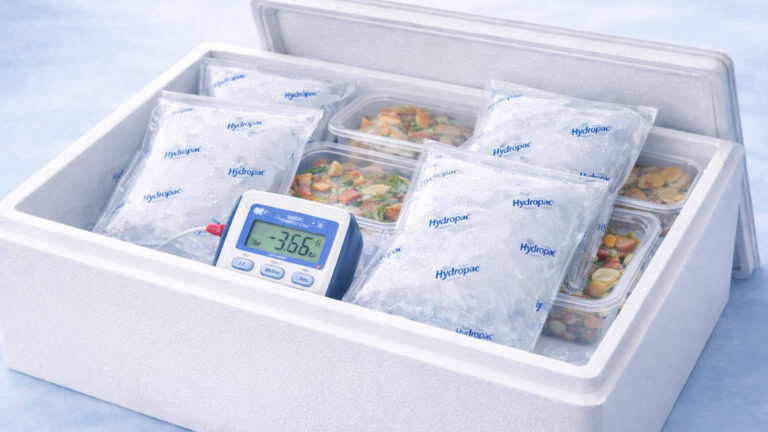
Temperature control is determined by how the full system is configured, not by insulation alone. The type and volume of refrigerant, the placement of cooling elements and the internal pack-out all influence how a system performs over time.
Inconsistent pack-out or poorly aligned configurations are a common cause of temperature deviation, even when high-performance materials are used. For this reason, packaging systems must be developed as integrated solutions, where insulation, refrigerants and configuration are aligned to the specific route profile and handling conditions.
Performance Driven by Testing and Validation
Validated performance is critical in temperature controlled packaging. Hydropac systems are tested using climate chamber simulations based on UK summer and winter profiles, alongside real-world distribution trials.
This ensures that systems are designed around actual conditions rather than theoretical specifications. It also allows configurations to be refined based on measured performance, reducing temperature risk while avoiding unnecessary over-specification.
Contact us directly
We are ready to answer all your questions and help you find the perfect solution for your cold chain transport.
FAQ's about Temperature Controlled Packaging
How do I choose the right temperature controlled packaging system for my operation?
The correct system depends on transit duration, external conditions and product sensitivity. Short-duration parcel shipments can often be managed with liner-based systems, while longer or higher-risk routes require more robust insulation and increased refrigerant capacity. The key is aligning the packaging configuration to the actual route profile rather than selecting a standard solution.
What is the difference between liner-based systems and insulated shipping boxes?
Liner-based systems use flexible insulation within an outer box and are typically used for high-volume, cost-sensitive distribution such as food delivery. Insulated shipping boxes provide higher thermal resistance and are used where tighter temperature control or longer transit durations are required, particularly in pharmaceutical applications.
How much impact does pack-out configuration have on performance?
Pack-out configuration has a significant impact on thermal performance. The placement and conditioning of refrigerants, as well as the amount of internal air space, directly influence how long a system can maintain temperature. Inconsistent pack-out is a common cause of temperature deviation, even when high-performance materials are used.
How is packaging performance validated for real distribution conditions?
Performance is typically validated through climate chamber testing and real-world distribution trials. These tests simulate summer and winter profiles and measure how systems behave over time, ensuring that packaging configurations can maintain temperature control under actual operating conditions.
Can temperature controlled packaging be optimised without increasing cost?
Yes. In many cases, systems are either over-specified or inefficiently configured. By aligning insulation, refrigerants and pack-out to the actual distribution profile, it is often possible to reduce material usage while improving performance, resulting in lower overall cost without increasing temperature risk.