
Trusted by leading companies
Temperature sensitive shipping
Packaging systems designed around product sensitivity, allowable temperature ranges and real transit risk
— Built for Product Integrity, Compliance and Risk Control —
When product sensitivity defines the packaging requirement
Temperature sensitive shipping applies to products that must remain within a defined temperature range to preserve quality, safety, efficacy or usability during distribution. In these applications, the packaging requirement is not determined by transit time alone, but by how much temperature deviation the product can tolerate without risk.
Some products can absorb minor fluctuation without consequence. Others require tighter thermal stability, where even short periods outside the acceptable range can lead to reduced shelf life, loss of efficacy or compliance issues. This means that shipping performance must be assessed against product sensitivity, expected exposure and operational variability, rather than nominal delivery windows alone.
Hydropac develops temperature sensitive shipping systems by aligning insulation, refrigerants and pack configuration to the actual risk profile of the shipment. The result is more reliable temperature control under real distribution conditions, without relying on over-specified packaging or generic duration claims.
Discover Temperature sensitive shipping
Hydropac isn’t just packaging; it’s a revolution of quality, innovation, and sustainability. Join us on this exciting journey to redefine packaging excellence.



Not all chilled shipments are truly temperature sensitive
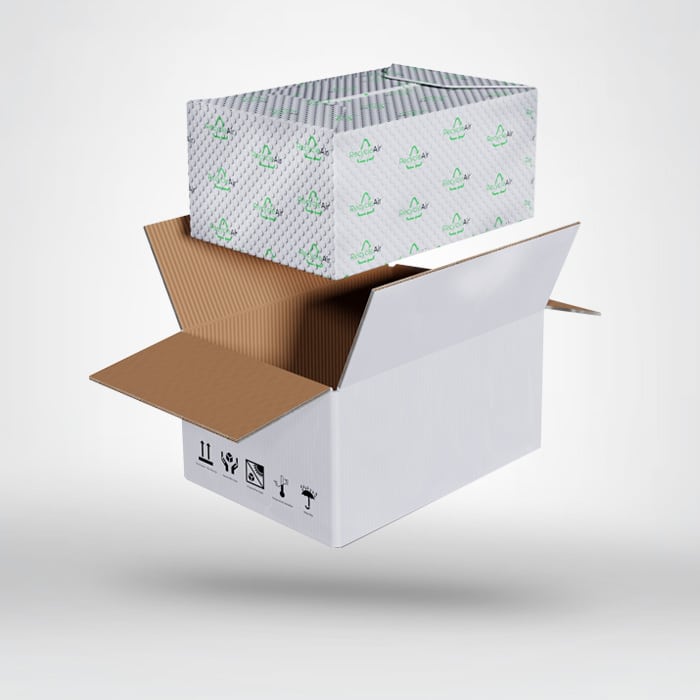
Many chilled shipments require thermal protection, but not all carry the same level of temperature risk. A product with a broader tolerance can often be shipped successfully using a lighter, more flexible system, provided the route is well understood and exposure is controlled. By contrast, products with a narrow allowable range demand a more precise packaging response, where stability matters as much as duration.
This is the key difference in temperature sensitive shipping. The objective is not simply to keep a shipment cool for as long as possible, but to maintain the product within an acceptable temperature band throughout the distribution cycle. That includes accounting for handling time, pre-dispatch exposure, transit variability and the effect of refrigerant behaviour within the pack.
For that reason, system design must begin with product sensitivity and expected risk, not with a generic 24, 48 or 72-hour shipping claim.

What makes a shipment temperature sensitive?
A shipment is temperature sensitive when the product must remain within a defined temperature range to protect its quality, safety, efficacy or usability during transport. In these cases, temperature control is not simply beneficial, but necessary to prevent damage, degradation or loss of compliance.
This can apply to pharmaceuticals, biologics, diagnostics, chilled foods, specialty ingredients and frozen products. The key factor is not the sector itself, but the product’s tolerance to deviation. Some goods can absorb minor fluctuation, while others have a much smaller margin for error and require tighter thermal control throughout the journey.
Why product sensitivity changes packaging design
Two shipments moving through the same temperature controlled shipping environment can require very different packaging systems. This is why temperature sensitive shipping cannot be specified by transit time alone.
A standard 48-hour or 72-hour claim does not show whether a system is suitable for the actual product. The required temperature range, expected exposure, payload characteristics and performance margin all affect how the system will perform in practice.
Where sensitivity is higher, packaging may need greater insulation, a different refrigerant strategy or more protection against delays and dwell time. Effective system design starts with the product requirement first, then aligns the temperature controlled packaging system to the route risk.
The most common causes of temperature excursions
Temperature excursions are often caused not by material failure, but by poor alignment between the product requirement, the packaging system and the way shipments are handled in practice.
Incorrect refrigerant conditioning
Refrigerants only perform properly when conditioned correctly before pack-out. If they are too warm, they may not provide enough thermal capacity. If they are too cold or used incorrectly, they can create an unstable internal profile or expose the product to unnecessary cold stress.
Inconsistent pack-out
System performance depends on repeatability. Small differences in refrigerant placement, payload arrangement or internal void space can change how heat moves through the pack, reducing consistency across shipments.
Extended exposure during staging and handling
A packaging system begins losing performance margin as soon as it is exposed to ambient conditions. Time spent during assembly, staging, loading and dispatch must therefore be treated as part of the total thermal load, not separate from transit.
Mismatch between planned and actual transit duration
Many systems are selected against nominal delivery times rather than real shipping conditions. In practice, delays, depot dwell time and failed delivery attempts can quickly push a shipment beyond its safe operating window.
This is especially important in parcel networks, where real distribution exposure often extends beyond the nominal delivery window, as explored in our practical guide to temperature controlled packaging for 24–72 hour lanes.
Selecting the right packaging system for temperature sensitive products
The right packaging system depends on product sensitivity, transit conditions and operational variability. The goal is not to choose the heaviest solution, but the one that provides the right level of thermal protection and stability for the actual shipping profile.
Flexible liner systems for controlled chilled applications
Flexible liner systems can work well for chilled products where the allowable range is manageable and transit conditions are relatively controlled. They offer strong packing efficiency and can provide effective performance without unnecessary cost or complexity.
Higher performance systems for tighter tolerances
As product sensitivity increases, systems often need greater thermal resistance and a larger performance margin, often requiring temperature controlled courier boxes or other higher-performance insulated formats. This becomes more important where the temperature range is narrow, transit duration is less predictable or the consequence of deviation is higher.
Refrigerants as part of the system, not an add-on
Refrigerants are a core part of system performance. Their type, volume, conditioning state and placement all influence how the internal temperature profile behaves over time. Insulation alone is not enough if the coolant strategy is poorly matched.
When validated or pre-qualified systems are needed
For higher-risk applications, generic duration claims may not be sufficient. Where tolerances are tighter or compliance requirements are greater, validated or pre-qualified systems can provide stronger evidence of suitability.
Validation and operational control in real distribution conditions
Temperature sensitive shipping cannot be managed reliably through theory alone. Systems need to be assessed against the conditions they are actually expected to face, including seasonality, ambient exposure, handling stages and likely transit variability.
Climate chamber testing, seasonal profiling and real-world shipping trials all help determine whether a system is appropriate for the product and route. Just as importantly, performance depends on consistent refrigerant handling, repeatable pack-out and disciplined dispatch processes.
The most reliable results come from treating temperature sensitive shipping as an integrated system, where packaging, refrigerants and operating practice are all aligned to the needs of the product.
Contact us directly
We are ready to answer all your questions and help you find the perfect solution for your cold chain transport.
From issue to a customised cooling solution
In this way we help you to guarantee the quality and safety of food products under all circumstances.
Mass production
Transport
End user
FAQ's about Temperature sensitive shipping
What does temperature sensitive shipping mean in practice?
Temperature sensitive shipping refers to the transport of products that must remain within a defined temperature range to preserve quality, safety, efficacy or usability. In practice, this means packaging must be selected based on product tolerance and risk, rather than simply using a standard chilled shipping format.
How do I know if my product is truly temperature sensitive?
A product is temperature sensitive if even limited deviation outside its recommended range can affect quality, compliance, shelf life or performance. The narrower the allowable temperature band and the greater the consequence of excursion, the more carefully the shipping system needs to be specified.
Why is transit time alone not enough to choose packaging?
Transit time is only one part of shipping risk. Product sensitivity, ambient exposure, staging time, handling conditions and delivery variability all affect how a system performs. A packaging solution that appears suitable on paper may be under-specified once real operational conditions are taken into account.
Can incorrectly conditioned refrigerants damage temperature sensitive products?
Yes. Refrigerants that are conditioned incorrectly can create an unstable temperature profile inside the pack. In some cases, they may fail to provide enough cooling. In others, they may expose the product to unnecessary cold stress. Correct refrigerant preparation is therefore an essential part of system performance.
When does temperature sensitive shipping require a validated or pre-qualified system?
Validated or pre-qualified systems become more important when the acceptable temperature range is tighter, the value of the product is higher, compliance requirements are greater or transit conditions are less predictable. In these cases, proven suitability offers more confidence than a generic duration claim.
— Related articles —
 Temperature controlled packaging
 A practical guide to temperature controlled packaging for 24–72 hour lanes
 Temperature controlled packaging
 Preventing temperature excursions in chilled distribution
 Temperature controlled packaging