
Trusted by leading companies
Vaccine Cold Chain Packaging
Packaging systems for 2–8°C vaccine shipments, cold shock prevention and healthcare distribution
— Built for 2–8°C Control, Vaccine Integrity and Pack-Out Confidence —
Cold Chain Packaging for Vaccines That Cannot Afford Temperature Drift
Vaccine cold chain packaging plays a critical role in protecting temperature-sensitive vaccines during storage, handling and transport. For many vaccine shipments, the required refrigerated range is 2–8°C, but maintaining that range in real distribution conditions is not as simple as placing ice packs inside an insulated box.
A vaccine shipment can be exposed to multiple risk points before it reaches the end user: packing time, staging, courier collection, depot handling, final-mile delivery and seasonal ambient change. The packaging system must protect against heat gain, but it must also avoid excessive cold exposure, cold shock and localised freezing caused by direct contact with frozen coolants.
Discover Vaccine Cold Chain Packaging Solutions
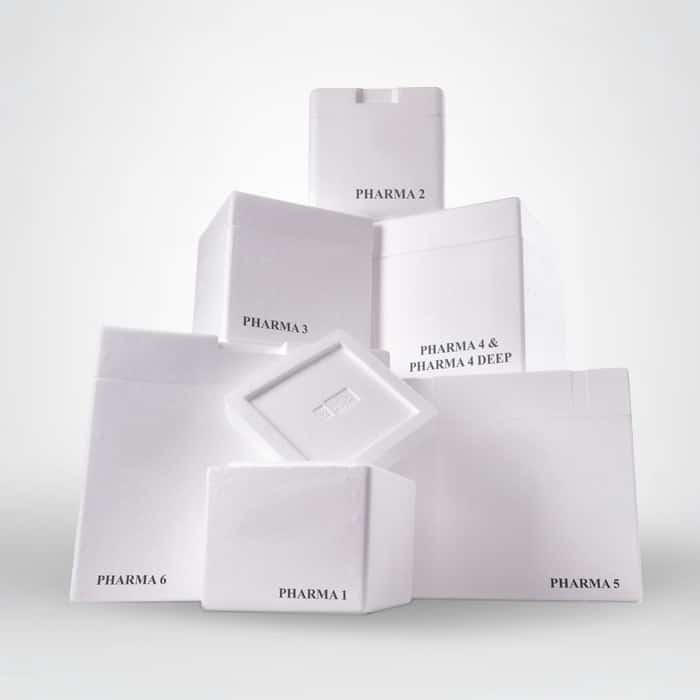
Vaccine packaging performance depends on the full system: insulation, coolant, payload separation, thermal buffering and repeatable pack-out instructions. Explore Hydropac solutions designed to support temperature-sensitive vaccine and healthcare shipments through real-world distribution conditions.
A Controlled Approach to Vaccine Packaging Risk
Vaccine Packaging Has to Prevent Both Warming and Overcooling
Vaccine cold chain packaging is often discussed in terms of keeping products cold, but that is only one side of the risk. A refrigerated vaccine shipment needs to stay within its required range without being exposed to excessive cold, direct contact with frozen coolants or unstable temperature behaviour inside the pack.
This is why the pack-out matters as much as the materials. Insulation slows heat transfer, coolants provide thermal capacity and payload separation helps prevent localised cold exposure. If the coolant is poorly conditioned or placed too close to the vaccine payload, the system may create cold shock or freezing risk even when the outer packaging appears suitable.
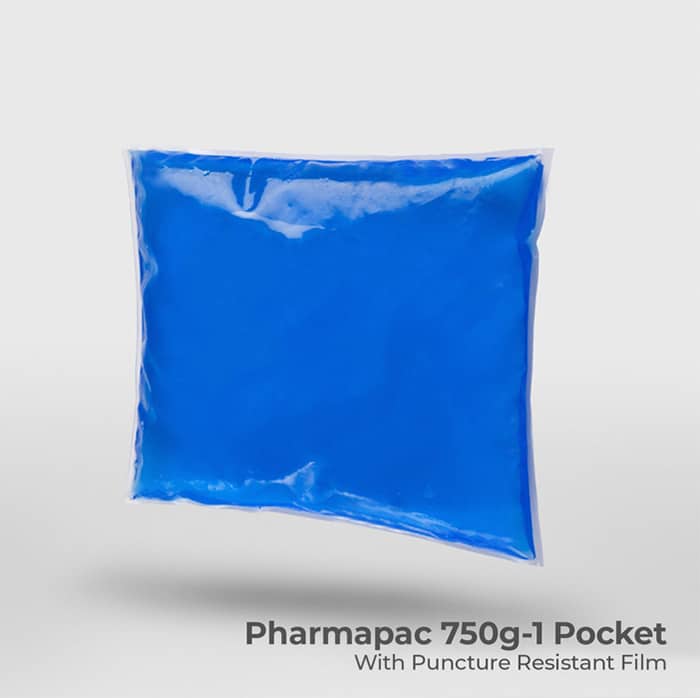
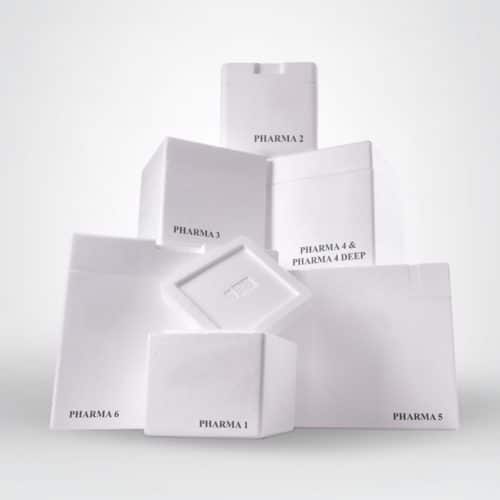
Hydropac helps customers assess vaccine packaging as a complete passive system. For some shipments, PharmaPac gel packs and insulated boxes may be suitable as part of a confirmed pack-out. For others, a pre-qualified system such as PharmaPac Genesis or a validation-led review may be more appropriate.

Vaccine Cold Chain Packaging for 2–8°C Control
Vaccine cold chain packaging has to manage a narrow temperature range. For many refrigerated vaccine shipments, the required range is +2°C to +8°C, but the packaging system must also protect against cold shock, localised freezing and avoidable temperature excursions.
This makes vaccine packaging different from standard chilled packaging. The objective is not to make the shipment as cold as possible. The objective is to keep the payload within the required conditions for the specific product, route and pack-out.
A vaccine shipment may be affected by:
- coolant temperature at the point of packing;
- payload size and thermal mass;
- internal air space;
- direct contact between coolant and product;
- courier handovers and dwell time;
- seasonal ambient exposure;
- delays before collection or delivery.
That is why vaccine packaging needs to be designed as a complete passive system. Insulation, coolant technology, payload separation and pack-out instructions all influence whether the system can protect the product in real distribution conditions. For wider route and handover considerations, this connects naturally with Pharma Cold Chain Logistics.
Why “More Coolant” Is Not Always Safer
A common mistake in vaccine shipping is assuming that more coolant means better protection. In reality, excessive or poorly placed coolant can create a different risk: the payload may become too cold.
Vaccines can be vulnerable to freezing exposure. A pack may look correct from the outside while still creating internal cold spots near frozen cooling elements. This is especially relevant during the first hours after packing, when coolants are at their coldest and the payload is still stabilising inside the package.
The key pack-out risks
A vaccine pack-out should control:
- heat gain, where the payload rises above the required range;
- cold shock, where the product is exposed to excessive cold too quickly;
- localised freezing, where areas close to the coolant become colder than the rest of the package;
- operator variation, where the same pack-out is assembled differently between shifts or sites.
This is why payload separation and thermal buffering are just as important as insulation and coolant volume.
Ice Packs, Gel Packs and PCM Cooling Elements
The coolant used in a vaccine packaging system determines how the internal temperature behaves. Standard frozen ice packs, gel packs and PCM cooling elements can all support cold-chain packaging, but they do not perform in the same way.
Water-based ice packs and gel packs provide strong thermal mass and can be effective in the right insulated system. They must be conditioned and positioned correctly, especially where the vaccine payload is sensitive to direct cold exposure.
PCM, or phase-change material, is used in pharmaceutical cold-chain packaging where the target temperature profile needs to be more controlled. Instead of simply acting as frozen mass, a PCM pack is selected around a phase-change point, helping support a narrower temperature range when used in a validated pack-out.
The practical question is not: which coolant is coldest?
The better question is: which coolant, insulation and pack-out configuration gives the correct temperature behaviour for this vaccine shipment?
For some vaccine movements, PharmaPac gel packs and polystyrene boxes may be appropriate as part of a confirmed configuration. For higher-risk, repeated or more sensitive 2–8°C shipments, a pre-qualified or validation-led system may provide a stronger starting point.
Pre-Qualified Vaccine Packaging and PharmaPac Genesis
Vaccine shipments need repeatability. A pack-out that performs well once can still create risk if operators condition coolants differently, place components in the wrong order or interpret instructions inconsistently.
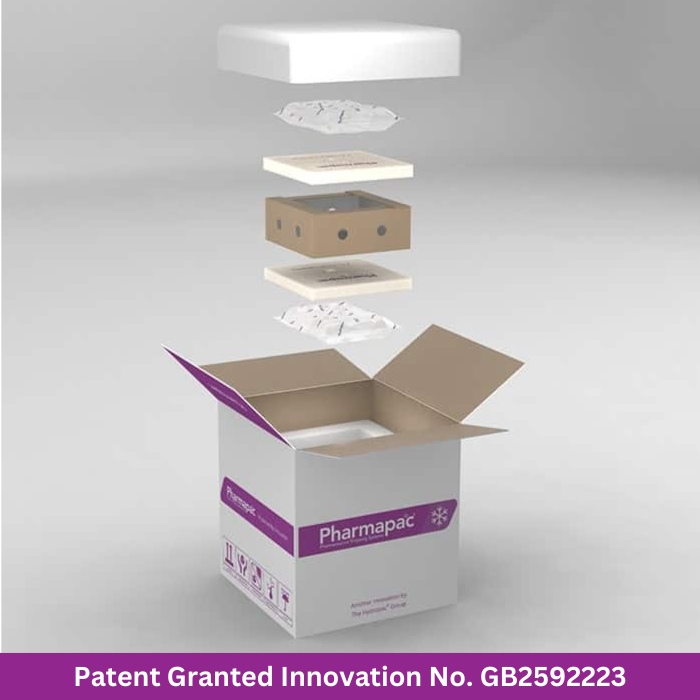
A pre-qualified passive packaging system helps reduce that variation by giving teams a defined configuration to follow. PharmaPac Genesis is especially relevant because it is designed as a structured refrigerated healthcare packaging system using a polystyrene box, ice packs, universal payload tray and Thermal Control Filter Pack.
The value of this structure is both practical and thermal:
Payload tray
Helps position the refrigerated payload consistently inside the system.
Thermal Control Filter Pack
Helps buffer cooling energy and reduce direct contact between ice and product.
Defined component layout
Reduces operator uncertainty and supports a more repeatable pack-out.
Published Genesis information references tested seasonal profiles, including worst-case summer and longer spring/autumn/winter configurations. These claims should always remain tied to the specific Genesis system, payload, pack-out and test profile. Hydropac’s own knowledge base positions Genesis as a pre-qualified/validated system for refrigerated healthcare payloads, with thermal buffering designed to reduce cold shock risk.
Designing Around the Route, Not Just the Temperature Range
A 2–8°C requirement does not tell the full story. Two vaccine shipments may share the same target range but need different packaging because the route, payload and handling process are different.
A short controlled route may need a different system from a courier network with multiple handovers. A small vaccine payload may need more careful buffering than a larger payload with greater thermal mass. A repeated programme may need clearer pack-out instructions and stronger evidence than a one-off dispatch.
Before selecting a vaccine packaging system, Hydropac customers should consider:
- required product conditions;
- payload volume and weight;
- expected transit duration;
- time outside controlled storage;
- courier or distribution model;
- ambient profile;
- monitoring requirements;
- whether the lane needs testing or validation.
This is where Hydropac’s Cold Chain Optimisation support becomes valuable. The aim is not to add unnecessary weight, coolant or complexity. The aim is to create a pack-out that is right-sized for the product, route and level of risk.
For broader system choice, the existing Hydropac article Passive vs Active Systems in Pharmaceutical Logistics supports the decision between passive packaging and active temperature-control methods.
Reducing Cold Chain Breach Risk in Vaccine Shipments
A vaccine cold chain breach can create more than a delivery issue. If the required conditions cannot be demonstrated, the shipment may need to be quarantined, assessed or replaced. UKHSA incident guidance notes that vaccine wastage reported through ImmForm in 2019 had a list price value of around £5.7 million, with 76% of reported wastage incidents described as avoidable.
That is why vaccine packaging should be selected around risk reduction, not only product fit. A strong passive system should make the pack-out easier to repeat, easier to train and easier to review if a shipment needs investigation.
For clinical supply movements with similar temperature-risk pressures, the existing Hydropac article Clinical Trial Shipping and Temperature Risk Management is a useful supporting resource.
Hydropac supports vaccine and biologic cold-chain risk reduction through passive packaging systems, PharmaPac products and cold-chain optimisation support. The goal is to help customers select packaging that is practical to pack, appropriate for the route and aligned with the level of evidence required for the shipment.
Contact us directly
We are ready to answer all your questions and help you find the perfect solution for your cold chain transport.
From issue to a customised cooling solution
In this way we help you to guarantee the quality and safety of food products under all circumstances.
Mass production
Transport
End user
FAQ’s about Vaccine Cold Chain Packaging
What is vaccine cold chain packaging?
Vaccine cold chain packaging is temperature-controlled packaging designed to help protect vaccines during storage, handling and transport. It usually combines insulation, coolants, payload separation and a defined pack-out configuration to help maintain the required product conditions during distribution.
What temperature range is needed for vaccine shipping?
Many refrigerated vaccine shipments require a 2–8°C temperature range, but the exact requirement should always be confirmed against the manufacturer’s product information and handling instructions. The packaging system should be selected around the vaccine, payload size, route profile and pack-out process.
Why is freezing a risk in vaccine cold chain packaging?
Freezing risk can occur when frozen coolants are placed too close to the vaccine payload, when coolants are not conditioned correctly or when the pack-out does not include enough separation or thermal buffering. A vaccine pack-out should manage both heat gain and excessive cold exposure.
When should I use a pre-qualified vaccine packaging system?
A pre-qualified system may be appropriate where a refrigerated vaccine payload needs a clearer, tested and repeatable pack-out configuration. This can be useful for higher-risk shipments, repeated distribution routes or operations where packing consistency and process control are important.
Does Hydropac transport vaccines?
Hydropac supplies passive cold-chain packaging systems, coolants, insulated boxes and cold-chain optimisation support. Hydropac should not be positioned as a vaccine courier or logistics carrier. Its packaging can support vaccine cold chain operations, but transport is handled by the customer, courier or logistics provider.
— Related articles —
 Eco Friendly
 Is dry ice the best way to control the temperature of food?
 Pharmaceutical Shipping
 Why some medications must be stored at low temperatures
 Packaging