
Trusted by leading companies
Medical Specimen Shipping
Temperature-control for diagnostic samples, healthcare materials and medical courier movements
— Built for Sample Integrity, Courier Handling and Temperature Risk Control —
Courier-Ready Packaging for Temperature-Sensitive Medical Specimens
Medical specimen shipping can involve diagnostic samples, healthcare materials, clinical samples and other temperature-sensitive payloads that need to move between healthcare providers, laboratories, clinics, research sites and courier networks. In these movements, packaging has to do more than hold the contents. It must support temperature control, practical handling and sample integrity through the real conditions of collection, staging, transit and delivery.
Specimen movements can be affected by small operational variables: the time a sample waits before collection, the way the package is handled by a courier, the internal air space around the payload, the coolant used and the external conditions during the route. Where samples are temperature-sensitive, the passive packaging system needs to be selected around the sample type, route profile and handling process.
Discover Medical Specimen Shipping Solutions
Medical specimen packaging performance depends on how insulation, coolant, payload separation and handling process work together. Explore Hydropac solutions that can support temperature-sensitive diagnostic, clinical and healthcare sample movements through courier and distribution networks.

A Practical Approach to Specimen Movement Risk
Specimen Packaging Has to Protect the Sample Through Handling, Not Just Transit
Medical specimen shipping often involves short, practical courier movements, but that does not make the packaging decision simple. Samples may be collected from healthcare sites, staged before courier handover, moved through depot networks or delivered to laboratories where timing and condition can both affect downstream processes.
For temperature-sensitive specimens, packaging needs to manage more than external temperature. Coolant conditioning, payload separation, internal air space, box format and time outside controlled storage all influence how the sample environment behaves. A pack-out that looks suitable in theory can become less reliable if it is difficult to repeat or poorly matched to the courier route.
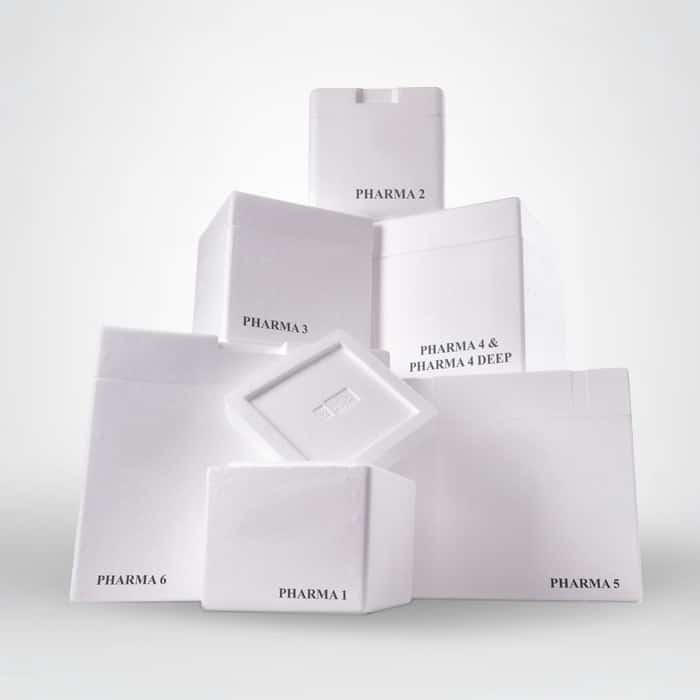
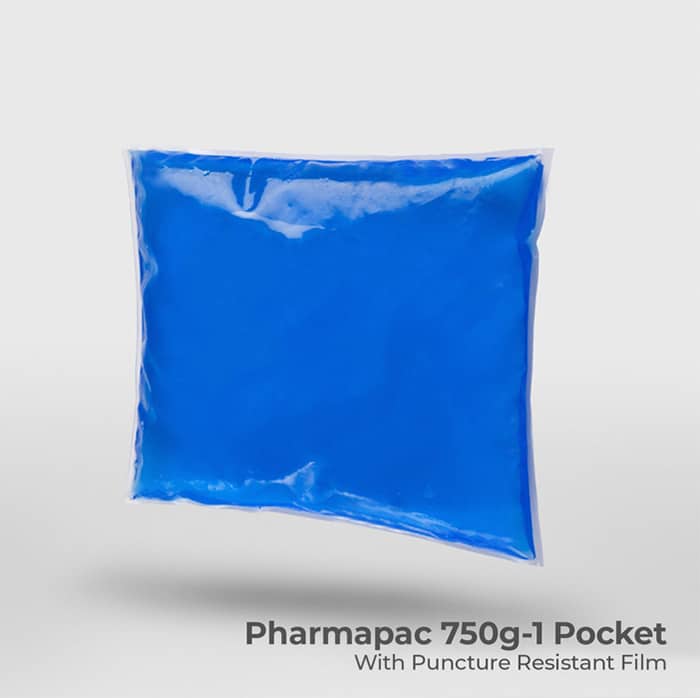
Hydropac helps customers review medical specimen packaging as a passive system. PharmaPac gel packs, insulated boxes and cold-chain optimisation support can be used to build practical pack-outs around sample sensitivity, route exposure and operational handling requirements.
Medical Specimen Shipping Starts With the Sample Requirements
Medical specimen shipping begins with the sample, not the box. Diagnostic samples, clinical materials, blood tubes, swabs, biological specimens and research samples can all have different handling requirements. Some may need refrigerated transport, some may need ambient conditions, and some may need to reach the laboratory as soon as possible.
This is why medical specimen packaging should never be selected around a generic “keep it cold” assumption. The correct pack-out depends on the sample type, the receiving laboratory’s instructions, the courier route and the time between collection and processing.
For temperature-sensitive samples, packaging becomes part of the sample integrity process. It helps protect the payload during collection, staging, courier handover, transit and delivery. This connects closely with Pharmaceutical Cold Chain Packaging, where the packaging system is selected around product sensitivity, route exposure and operational risk.
Temperature-Controlled Packaging for Courier and Lab Movements
Medical specimen movements are often short, but they are not always simple. A sample may be collected from a clinic, staged at a healthcare site, handed to a courier, moved through a depot or delivered into a laboratory intake process.
Each stage can affect condition on arrival. The packaging system should account for:
- required sample storage or transport conditions;
- time between collection and courier handover;
- expected route duration;
- exposure to ambient temperature during staging or transport;
- payload size and internal air space;
- coolant type, quantity and conditioning;
- separation between coolant and sample container;
- monitoring or documented pack-out requirements.
This is where courier-ready insulated packaging becomes valuable. A well-designed passive system helps reduce avoidable variation between collection and laboratory receipt, especially where the same sample route is repeated across multiple sites or couriers.
For wider route-risk thinking, Pharma Cold Chain Logistics goes deeper into handovers, dwell time and cold-chain control across distribution networks.
Cooling the Sample Without Creating New Risk
For refrigerated medical specimens, the aim is controlled temperature protection, not maximum cooling. Adding more coolant is not always safer.
A gel pack that sits too close to a sample container can create localised cold spots. Insufficient insulation or coolant can allow samples to warm during courier delays or hot ambient conditions. Too much internal air space can make the pack-out less stable. These small details can affect whether the sample reaches the laboratory in a usable condition.
A stronger medical specimen pack-out should define:
Coolant conditioning
How gel packs or other cooling media should be prepared before packing.
Payload separation
How the sample container is protected from direct contact with cooling media.
Internal fit
How movement, empty space and orientation risk are reduced inside the package.
Handover timing
How long the packed system may remain before courier collection or laboratory receipt.
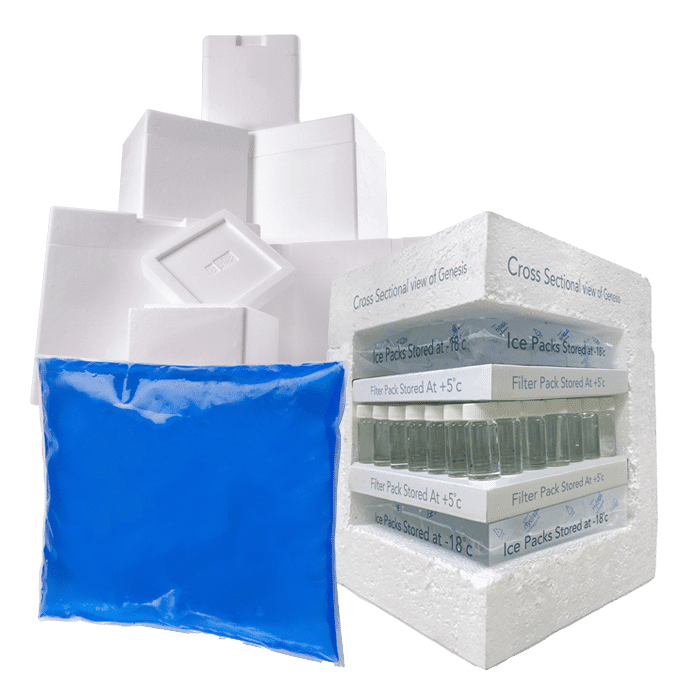
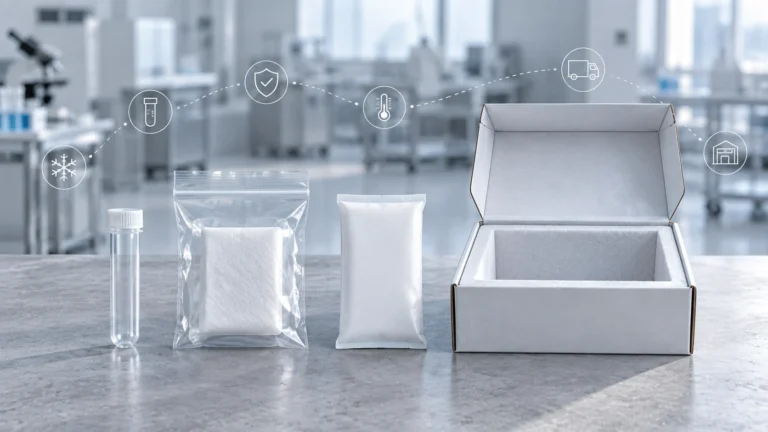
Hydropac’s PharmaPac gel packs and insulated polystyrene boxes can support temperature-sensitive healthcare and diagnostic shipments where passive cooling is appropriate. For more structured refrigerated healthcare payloads, PharmaPac Genesis may be considered where the payload, route and intended use are suitable.
UN3373 and Specimen Packaging Responsibilities
Medical specimen shipping can involve UN3373, Category B biological substances, Packing Instruction 650, triple packaging and carrier-specific requirements. These requirements depend on the sample, classification, transport mode and courier process.
A typical compliant specimen shipment may involve several layers, including a primary receptacle, leakproof secondary packaging, absorbent material where required and suitable outer packaging. Some UN3373-related guidance also refers to pressure resistance requirements such as 95 kPa for the primary receptacle or secondary packaging. UKHSA COVID-19 sample packaging guidance, for example, states that either the primary receptacle or secondary packaging must be capable of withstanding 95 kPa internal pressure.
Hydropac’s role is to support the temperature-controlled packaging layer. Hydropac should not be positioned as classifying specimens, confirming UN3373 status, replacing P650 packaging instructions or taking responsibility for biological substance transport compliance.
Customers should confirm the correct classification, labelling, documentation, absorbent material, pressure-rated packaging and carrier requirements with the consignor, laboratory, courier or compliance lead before shipment.
Repeatable Pack-Outs for Labs, Clinics and Medical Couriers
The best medical specimen packaging is not only technically suitable; it is also easy to repeat. Busy clinics, diagnostic labs and courier teams need pack-outs that are clear, practical and difficult to misinterpret.
A repeatable pack-out helps reduce variation between shipments. It should make clear which insulated packaging is used, how many gel packs are required, where the sample sits, how direct coolant contact is avoided and when the package should be handed over for transport.
This is especially important where sample routes are repeated daily or across multiple collection points. A pack-out that relies on judgement can vary between operators, while a clear configuration can support more consistent sample handling.
For clinical and research-related sample movements, the existing Hydropac article Clinical Trial Shipping and Temperature Risk Management is a useful supporting resource because trial samples and clinical materials often share the same need for temperature control, process discipline and documented risk reduction.
Hydropac supports medical specimen shipping through passive temperature-controlled packaging, PharmaPac products and cold-chain optimisation support. The aim is to help
Contact us directly
We are ready to answer all your questions and help you find the perfect solution for your cold chain transport.
From issue to a customised cooling solution
In this way we help you to guarantee the quality and safety of food products under all circumstances.
Mass production
Transport
End user
FAQ’s about Pharma Cold Chain Logistics
What is medical specimen shipping?
Medical specimen shipping is the movement of diagnostic samples, healthcare samples, clinical materials or other medical specimens between healthcare providers, laboratories, clinics, research sites or courier networks. Where specimens are temperature-sensitive, the packaging system needs to support the required conditions during collection, handling and transport.
What packaging is needed for temperature-sensitive medical specimens?
The right packaging depends on the specimen type, required temperature conditions, payload size, route profile, courier process and any laboratory or carrier instructions. A passive system may combine insulated packaging, gel packs, payload separation and a defined pack-out process to help protect the sample during movement.
Can Hydropac packaging be used for UN3373 medical specimens?
Hydropac supplies passive temperature-controlled packaging, coolants and insulated systems. It should not be assumed that every product is suitable for every UN3373 shipment or classification requirement. The consignor, laboratory or courier must confirm the correct classification, packaging, labelling, documentation and carrier requirements for the specific specimen movement.
How can packaging help protect sample integrity during courier transport?
Packaging can help protect sample integrity by using suitable insulation, correctly conditioned coolants, payload separation and a repeatable pack-out process. This helps reduce temperature and handling risk during collection, staging, courier handover, transit and delivery.
Does Hydropac provide medical courier services?
Hydropac supplies passive temperature-controlled packaging systems, coolants, insulated boxes and cold-chain optimisation support. Hydropac should not be positioned as a medical courier or logistics carrier. Its packaging can support medical specimen shipping, but transport is handled by the customer, courier, laboratory or logistics provider.
— Related articles —
 Packaging
 How to protect Pharma shipment products from theft
 Pharmaceutical Shipping
 Cold storage for pharmaceuticals
 Pharmaceutical Shipping