
How to Send Chilled and Frozen Food in the UK: Courier Rules and Pack-Outs
Sending chilled or frozen food by courier is two problems at once. The first is permission: which networks will carry perishable food, on which services and with which coolants. The second is physics: keeping the product inside its legal temperature range for a journey you don’t control, through vans, depots and doorsteps.
In our experience, a failed food parcel is rarely down to the packaging alone. They come from a pack-out designed for one service and sent on another, a coolant the carrier doesn’t accept, or a box built for a single delivery attempt that ends up spending a night in a depot.
This guide covers both halves: what the rules actually say, and how to build a chilled or frozen pack-out that holds from the packing bench to the customer’s fridge.
Custom chilled solutions for you
Hydropac offers every customer a customized solution for chilled and conditioned shipping. For example, we help a customer with limited freezing capacity to deliver gel packs frozen and ready to use, and we can manufacture almost all shapes and sizes of cooling elements. As a customer, you come first: we are here to help you.
The Rules to Check Before You Choose a Box
The packaging specification starts with the carrier and the temperature the food has to stay at. Get those two fixed first and the pack-out becomes an engineering question rather than a guess.
The temperatures the law expects
In England, Wales and Northern Ireland, chilled food that needs temperature control must be kept at 8°C or below, and the Food Standards Agency recommends working to 5°C or below to leave a margin. Scotland requires chilled food to be kept refrigerated without setting a single figure, so most businesses work to the same targets. Frozen food should be held at -18°C or below; for quick-frozen products, only brief rises of a few degrees are tolerated during transport and local distribution. Those limits apply for the whole journey, including the hours your parcel spends with a carrier.
Royal Mail
Royal Mail accepts perishable food within the UK on its faster services, with 1st Class as the minimum and Tracked 24 or Tracked 48 recommended. The food must be able to withstand a journey of up to 48 hours. Parcels need a strong corrugated cardboard box or a purpose-designed polystyrene pack, leak-proof inner packaging, the word PERISHABLE on the outside and a clear return address. Royal Mail doesn’t accept dry ice, and it publishes its own rules on which coolants can go in a parcel, so check its current guidance before you build a pack-out around that network. Perishable food can’t be sent abroad with Royal Mail.
Parcel carriers and specialist networks
Other carriers set their own terms, and the same carrier can treat food differently depending on how you send. Counter and consumer services are often the strictest: the DPD service sold over the Post Office counter, for example, lists perishable food and any goods needing temperature-controlled transport as prohibited. Business accounts and dedicated chilled networks work on contract terms, so the rules that apply to you’re the ones in your account agreement. Ask your account manager three questions in writing: is chilled or frozen food accepted, which coolants are allowed, and what happens to a parcel after a failed delivery attempt.
Labelling and the hand-over
Mark the outer box clearly as perishable and as chilled or frozen, show the return address, and pack as close to collection as possible so the product leaves your chiller or freezer at its coldest. For trade customers, agree in advance what temperature on arrival you both treat as acceptable and how it will be checked, so a dispute over a warm delivery has an answer before it happens.
Pack-Outs That Hold From Bench to Doorstep
A pack-out is three decisions working together: the insulation, the coolant and the time it has to last. Change one and the other two need checking.
Chilled pack-outs
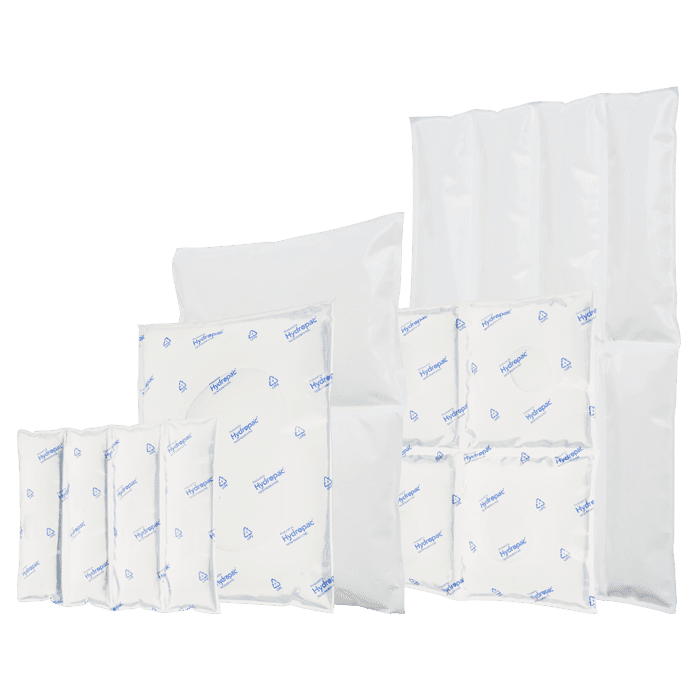
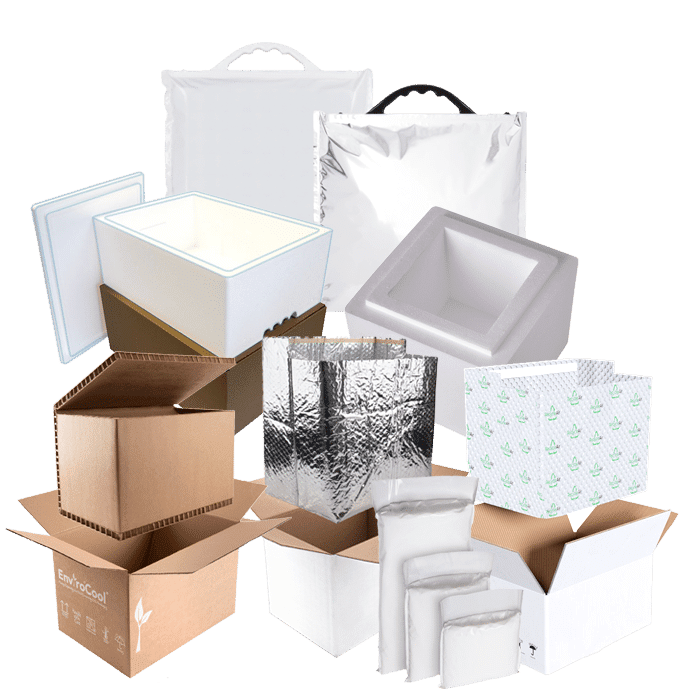
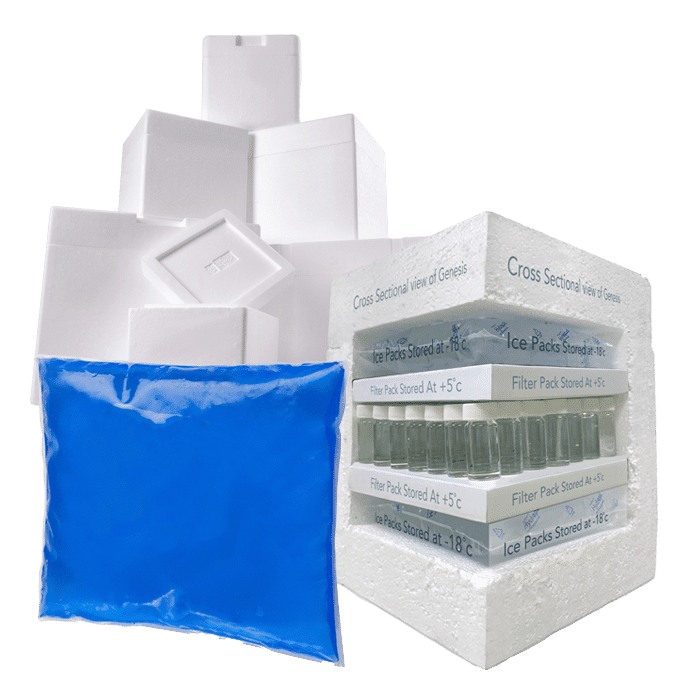
Start with product at 5°C or below, straight from the chiller. Line the box with an insulated liner or use an EPS box, fill the space around the product so there’s little air left to warm, and put the coolant on top, where warm air collects. Our water ice packs hold close to 0°C as they melt, which is the right range for chilled food, as long as your carrier accepts them on the service you use. Keep a barrier between coolant and delicate product so nothing freezes by contact.
Frozen pack-outs
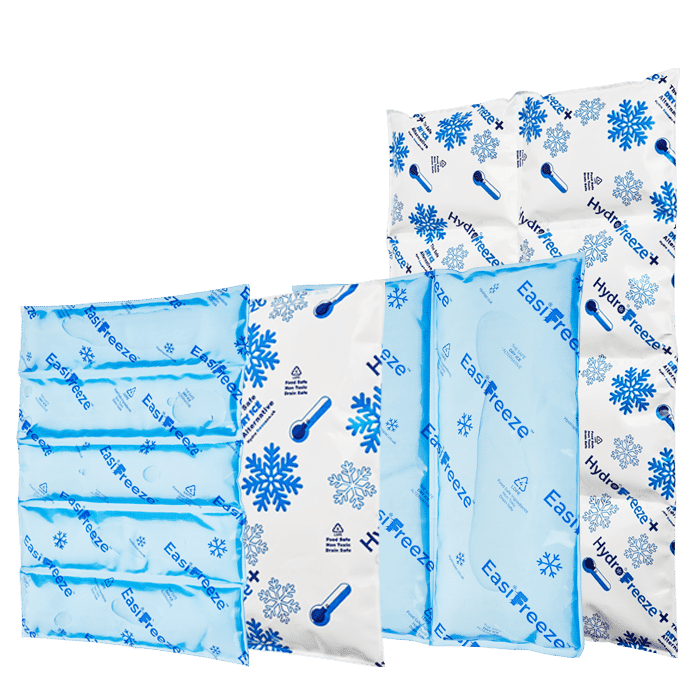
Frozen product needs a coolant that works below zero. Plain water stabilises around 0°C as it melts, which isn’t enough to keep food at -18°C. Our HydroFreeze and EasiFreeze packs are water-based formulas that change phase well below zero, and HydroFreeze isn’t classified as a dangerous good, so frozen shipments need no hazmat labelling or specialist courier. That doesn’t settle whether a particular carrier will accept frozen food, which still needs checking service by service. Use thicker insulation than for chilled, pack hard-frozen product tightly, and surround it with coolant rather than relying on a single pack.
Size the pack-out for the second day
Most pack-outs are built for one delivery attempt. Many parcels get two. A box that holds for 24 hours but spends the night in a depot after a missed delivery arrives warm. Size coolant and insulation for the journey you can realistically expect, not the ideal one, and despatch early in the week so a failed attempt never runs into a weekend. In the run-up to Christmas, when depots are at their busiest, plan for the longer journey as the norm rather than the exception. Our guide to how long ice packs last in transit explains what shortens hold time.
Switch configurations with the season
A summer pack-out wastes coolant in January, and a winter one fails in July. Run separate configurations for cool, warm and heatwave conditions, and remember that in winter the risk can flip: chilled food left on a frosty doorstep can freeze. Our seasonal pack-outs guide covers when and how to change over.
Prove It Before Peak
The only reliable pack-out is one tested against your product, your box and your actual route. Hydropac manufactures the coolant and supplies the insulation for chilled food shipping and frozen food delivery, from insulated liners to complete box systems. Our Cold Chain Optimisation team can assess your current pack-out, test it against your conditions and recommend the lightest configuration that keeps food inside its legal range, on the carrier you actually use.