
Preventing temperature excursions in chilled distribution
Preventing temperature excursions in chilled distribution is a constant operational priority for food, healthcare and pharmaceutical supply chains. Even short periods outside the required range can reduce shelf life, affect product quality or create compliance risks. As distribution networks become more fragmented, with more handovers, longer delivery windows and greater last-mile exposure, packaging design has become just as important as refrigerated storage and transport. For manufacturers such as Hydropac, this means building cooling systems around real transit conditions rather than ideal ones. With product families such as FreshPac, PharmaPac and water-based Ice Packs, the focus is on creating dependable passive packaging that supports temperature stability from dispatch through to delivery.
Custom chilled solutions for you
Hydropac offers every customer a customized solution for chilled and conditioned shipping. For example, we help a customer with limited freezing capacity to deliver gel packs frozen and ready to use, and we can manufacture almost all shapes and sizes of cooling elements. As a customer, you come first: we are here to help you.
Why temperature excursions happen
A temperature excursion occurs when a product moves outside its specified temperature range during storage or transport. In chilled food logistics, UK guidance states that cold food must be kept at 8°C or below, while in practice businesses are advised to operate at 5°C or below to allow for fluctuation. The Chilled Food Association similarly notes that chilled foods are designed to remain at refrigeration temperatures throughout their life, with 5°C commonly used as the working target.
Operational causes
Excursions rarely result from one single failure. More often, they arise from a combination of factors such as delayed despatch, poor pack-out design, repeated door openings, extended dwell times in depots, and deliveries left in uncontrolled environments. In pharmaceutical distribution, the same principle applies, but with tighter tolerances and stricter documentation requirements under GDP.
Environmental exposure
Ambient temperature remains one of the biggest variables in chilled distribution. Seasonal peaks, vehicle temperatures and solar gain all increase the thermal load on a parcel. If the packaging system has not been specified with sufficient buffer, the risk of excursion rises sharply once the refrigerant starts to lose capacity.
The role of packaging in prevention
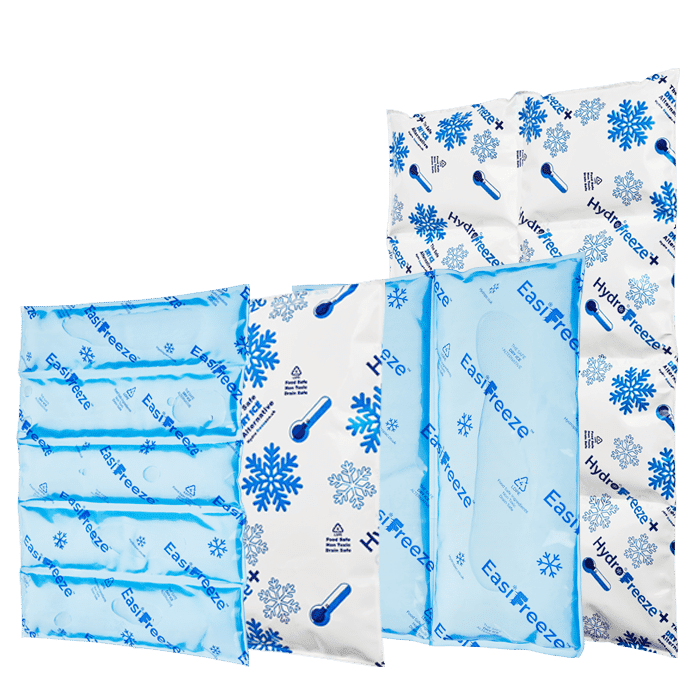
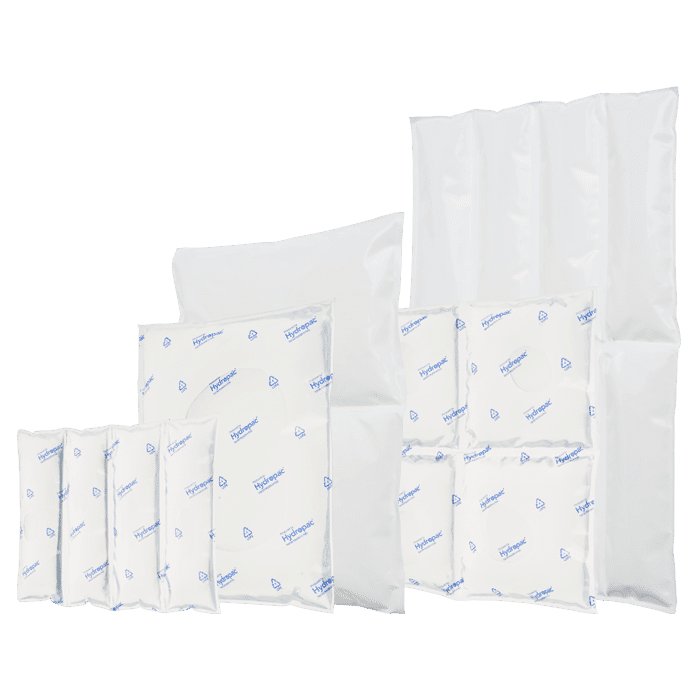
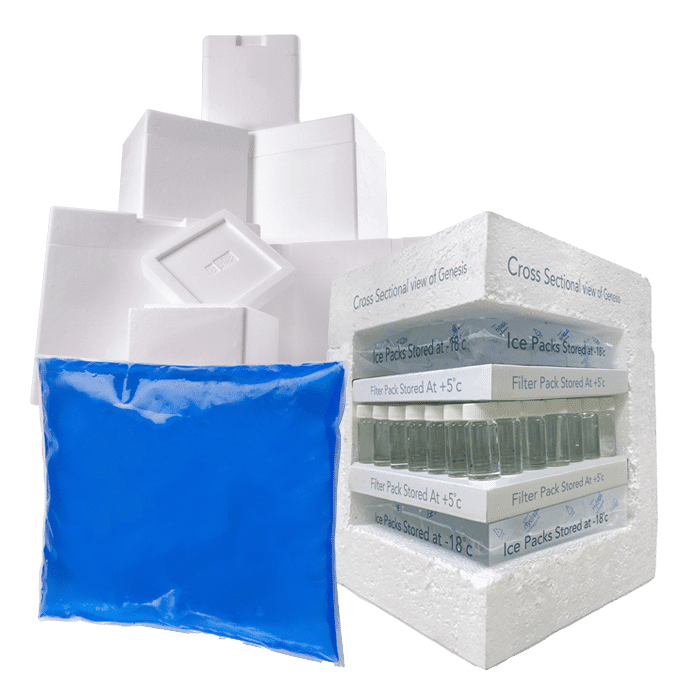
Preventing excursions is fundamentally about slowing heat ingress and controlling how cooling energy is released inside the shipper. Passive packaging systems do this through a combination of insulation and refrigerants. Hydropac’s product structure reflects this system-led approach, combining insulated food packaging under FreshPac, pharmaceutical formats under PharmaPac, and a wide range of water and gel-based ice packs for chilled and regulated applications.
Insulation performance
Insulation reduces the rate at which external heat reaches the payload. The better the thermal barrier, the longer the refrigerant can hold the desired range. This is why chilled packaging should be evaluated as a complete system rather than as an ice pack selection exercise alone.
Refrigerant selection
Refrigerants must be matched to the product requirement, transit duration and expected ambient conditions. Hydropac’s water ice packs are designed for food, pharmaceutical and medical logistics, and the company states that, in suitable insulated packaging, validated performance can extend up to 96 hours. That does not mean every shipment will achieve that duration, but it shows the importance of specifying the pack alongside the shipper rather than in isolation.
Pack-out design
The arrangement inside the box matters. Uneven placement can create localised warm zones, while overpacking can waste payload space and add cost without improving control. Effective chilled distribution usually depends on:
- correctly conditioned refrigerants
- insulation matched to route duration
- balanced pack placement around the payload
- allowance for delivery delays and handling exposure

Standards and compliance considerations
For chilled foods in England, Wales and Northern Ireland, food likely to support pathogen growth must be kept at 8°C or below at all stages including transport, storage and display. Industry practice targets 5°C or below to provide a safety margin. That distinction is important in packaging design, because legal compliance alone may not be enough to protect quality or shelf life in real-world distribution.
In pharmaceutical supply chains, GDP requires medicines to be consistently stored, transported and handled under suitable conditions in line with the marketing authorisation or product specification. Guidance also states that if a deviation such as a temperature excursion occurs during transport, it should be reported to the distributor and recipient. This pushes packaging decisions beyond convenience and into the realm of quality assurance and risk management.
Engineering for thermal stability
Heat transfer control
From an engineering perspective, chilled packaging must manage conduction, convection and radiation. Insulation reduces conductive heat gain, internal configuration helps limit convective hot spots, and reflective materials can reduce radiant heat load in certain use cases. The aim is not to make the parcel cold indefinitely, but to control the rate at which the internal environment changes.
Manufacturing quality
Consistency in the refrigerant itself also matters. Hydropac states that its water ice packs are produced under ISO 9001 quality standards using UV-filtered UK tap water, a three-stage filtration system, and seal-through-water technology to achieve a watertight, hygienic finish. The broader Hydropac range also references high burst strength, reusable LDPE-4 recyclable film and independent laboratory testing of production samples. These details matter because leakage, inconsistent fill or poor seal integrity can all undermine cold chain performance in transit.
Sector-specific applications
In chilled food distribution, FreshPac-style solutions are relevant where products such as dairy, seafood, produce and prepared meals need reliable short-to-medium duration transit protection. For healthcare and regulated medical shipments, PharmaPac systems and pharmaceutical ice packs are better aligned with documented temperature control and GDP expectations. Hydropac also positions these pharmaceutical solutions around products such as vaccines, biologics, insulin and diagnostic materials, where preventing excursions is directly linked to product efficacy and patient safety.
Sustainability in chilled distribution
Excursion prevention and sustainability do not need to conflict. Reusable water-based packs, recyclable LDPE film and right-sized pack systems can reduce waste while still maintaining control. Hydropac’s emphasis on reusable, leak-proof water packs and recyclable materials reflects the wider industry move towards lower-impact passive packaging.
Conclusion
Preventing temperature excursions in chilled distribution depends on more than refrigerated vehicles or good warehouse practice. It requires a packaging system that is designed for the route, the payload and the realistic risks of delay, handling and ambient exposure. For chilled foods, that means protecting products within a target range that supports both safety and quality. For pharmaceuticals, it means aligning packaging with GDP expectations and documented performance. Hydropac’s combination of FreshPac, PharmaPac and engineered Ice Packs shows how cold chain packaging can be developed as a complete thermal system, with manufacturing quality and validation built into the process rather than added as an afterthought.