
Passive vs active systems in pharmaceutical logistics
Temperature control in pharmaceutical logistics is a critical component of product safety, regulatory compliance, and supply chain efficiency. As global distribution networks become more complex, businesses must decide between passive and active temperature-controlled systems to maintain product integrity. Each approach offers distinct advantages depending on shipment duration, product sensitivity, and operational constraints. Manufacturers such as Hydropac play a key role in this landscape by developing passive packaging solutions that are engineered for reliability, particularly in last-mile and decentralised distribution. Understanding the differences between these systems is essential for designing a resilient and compliant cold chain.
Custom chilled solutions for you
Hydropac offers every customer a customized solution for chilled and conditioned shipping. For example, we help a customer with limited freezing capacity to deliver gel packs frozen and ready to use, and we can manufacture almost all shapes and sizes of cooling elements. As a customer, you come first: we are here to help you.
Understanding Passive and Active Systems
What Are Passive Systems?
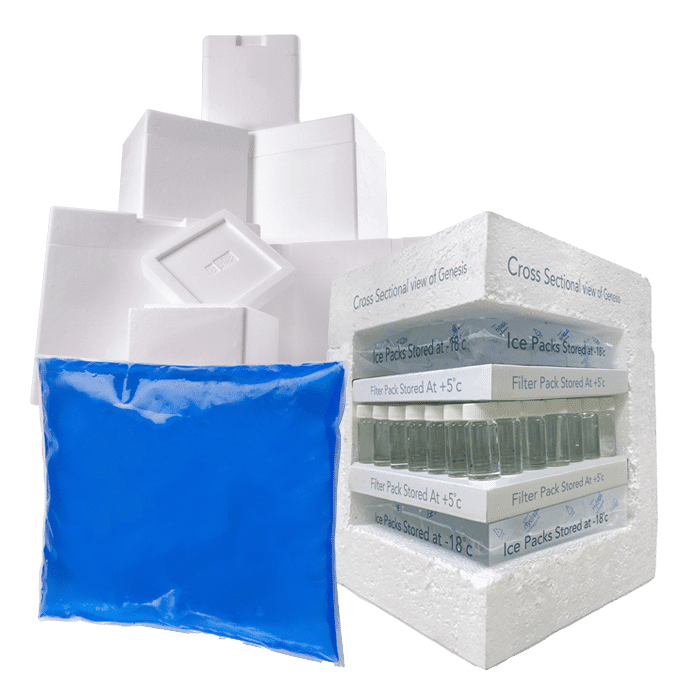
Passive systems rely on insulation and refrigerants, such as gel ice packs or phase change materials, to maintain a defined temperature range. They do not require an external power source and instead use thermal energy absorption to stabilise internal conditions.
Hydropac’s PharmaPac range is designed around this principle, combining insulated packaging with water-based Ice Packs to create validated systems suitable for pharmaceutical transport.
What Are Active Systems?
Active systems use powered refrigeration or heating units to actively regulate temperature. These systems are typically found in refrigerated containers, vehicles, or air freight units equipped with continuous temperature control and monitoring.
They are commonly used for long-haul or high-value shipments where precise temperature management is required over extended periods.
Key Differences in Performance and Application
Temperature Control and Stability
Active systems provide continuous temperature regulation, maintaining a fixed setpoint regardless of external conditions. Passive systems, by contrast, rely on pre-conditioned refrigerants and are limited by their thermal capacity, though they can be engineered to maintain stability for 48 to 96 hours or more.
Operational Flexibility
Passive systems are highly flexible and scalable. They are easy to deploy across different routes and are particularly effective in last-mile delivery. Active systems require dedicated infrastructure, making them less adaptable in decentralised logistics networks.
Cost and Resource Requirements
Active systems involve higher capital and operational costs due to equipment, energy use, and maintenance. Passive systems offer a more cost-efficient alternative, especially for shorter transit durations or distributed delivery models.
Risk Considerations
Passive systems have fewer mechanical failure points but depend heavily on correct pack-out and conditioning. Active systems reduce reliance on pack-out accuracy but introduce risks related to equipment malfunction or power loss.
The Role of Passive Packaging in Pharmaceutical Logistics
Passive systems depend on well-engineered packaging to achieve reliable performance. This is where manufacturers such as Hydropac contribute significant value through system design and validation.
Core Elements of Effective Passive Systems
- High-performance insulation to reduce heat ingress
- Carefully selected refrigerants matched to the required temperature range
- Optimised pack-out configurations to avoid hot or cold spots
- Pre-conditioning protocols tailored to the shipment profile
Hydropac integrates these elements into solutions such as and , which are designed to support GDP-compliant distribution without reliance on external power.
Regulatory Considerations and Compliance
Pharmaceutical logistics is governed by strict frameworks, most notably Good Distribution Practice (GDP). These guidelines require that medicinal products are transported under conditions that maintain their quality and integrity throughout the supply chain.
Both passive and active systems must demonstrate:
- Validated temperature performance
- Traceability and documentation
- Risk management procedures for excursions
Hydropac’s alignment with standards such as ISO 13485 supports their role in regulated supply chains, particularly where packaging is considered part of the overall quality system.



Scientific Principles Behind System Performance
Passive Systems and Thermal Energy
Passive systems function through phase change, where refrigerants absorb heat as they transition from solid to liquid. This stabilises the internal environment for a defined period.
Q = mL
The effectiveness of this process depends on the mass of the refrigerant and its latent heat capacity, as well as the insulating properties of the packaging.
Active Systems and Mechanical Control
Active systems use compressors and refrigerants to continuously remove heat, maintaining a consistent internal temperature. This makes them suitable for long-duration shipments but increases complexity and energy consumption.
Use Cases in Pharmaceutical Distribution
When Passive Systems Are Preferred
Passive solutions are commonly used for:
- Clinical trial materials and diagnostic samples
- Last-mile delivery of medicines
- Short to medium duration shipments
- Decentralised or multi-drop distribution models
Hydropac’s PharmaPac range is particularly suited to these applications, where validated performance and operational simplicity are essential.
When Active Systems Are Required
Active systems are typically chosen for:
- Long-haul international shipments
- High-value biologics with strict temperature tolerances
- Bulk transport between manufacturing and distribution hubs
In many cases, pharmaceutical supply chains adopt a hybrid approach, using active systems for primary transport and passive packaging for final delivery stages.
Sustainability and System Selection
Sustainability is becoming an increasingly important factor in system choice. Passive systems, particularly those using water-based refrigerants and recyclable materials, offer a lower environmental impact compared to energy-intensive active solutions.
Hydropac’s focus on water-based Ice Packs and recyclable materials supports this shift, enabling businesses to balance performance with environmental responsibility.
Conclusion
The choice between passive and active systems in pharmaceutical logistics is not a simple binary decision. It depends on a combination of product requirements, transit duration, regulatory obligations, and operational constraints. Passive systems offer flexibility, cost efficiency, and sustainability benefits, while active systems provide precise control for longer and more complex shipments.
By developing integrated solutions such as PharmaPac and high-performance Ice Packs, Hydropac supports pharmaceutical supply chains in achieving reliable temperature control without unnecessary complexity. Their system-led approach reflects the evolving needs of modern logistics, where performance, compliance, and efficiency must be carefully balanced.