
Clinical trial shipping and temperature risk management
Clinical trials rely on precision. From formulation and dosing to data collection, every stage of the process is carefully controlled. Yet one of the most overlooked risks in clinical research occurs outside the laboratory: transportation.
Investigational medicines, biologics and diagnostic materials frequently travel across international logistics networks before reaching clinical sites. During this journey, even a brief temperature deviation can compromise product stability and invalidate trial materials.
For sponsors and logistics teams, temperature-controlled packaging therefore becomes more than a shipping container. It is a critical part of the trial’s risk management strategy. Understanding how temperature risk arises and how packaging systems mitigate that risk is essential for maintaining the integrity of clinical trial supply chains.
Custom chilled solutions for you
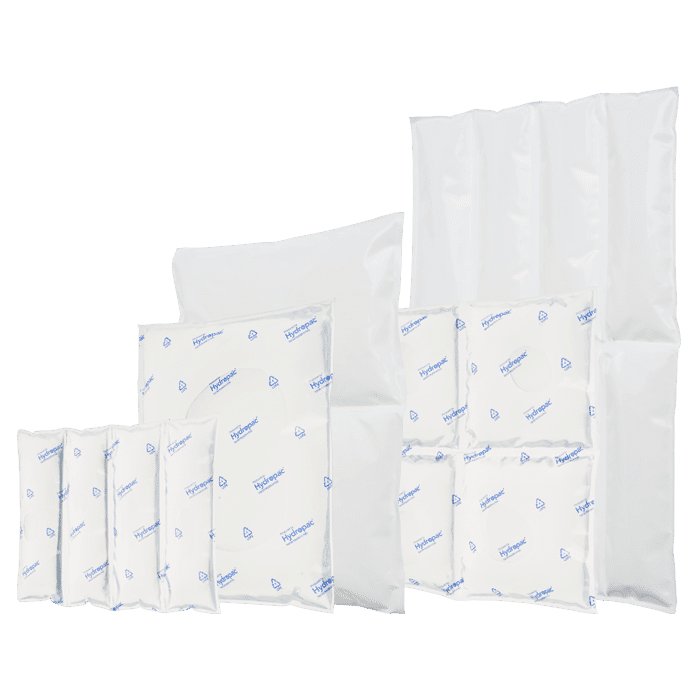
Hydropac offers every customer a customized solution for chilled and conditioned shipping. For example, we help a customer with limited freezing capacity to deliver gel packs frozen and ready to use, and we can manufacture almost all shapes and sizes of cooling elements. As a customer, you come first: we are here to help you.
Why temperature control matters in clinical trials
Many investigational medicinal products are highly sensitive to environmental conditions. Biological medicines, vaccines and advanced therapies can degrade when exposed to temperatures outside their validated range.
Typical clinical trial storage conditions include:
- 2°C to 8°C for refrigerated biologics
- –20°C for frozen materials
- ultra-low conditions below –70°C for specialised therapies
If these ranges are exceeded, the chemical or biological properties of the product may change. In some cases, stability loss is irreversible.
Unlike commercial pharmaceutical distribution, clinical trials often involve small batch sizes and limited supply. A single compromised shipment can therefore delay research timelines or force the replacement of valuable investigational material.
This risk places considerable pressure on clinical supply teams to ensure temperature stability throughout the transport process.
Temperature excursions: the hidden logistics threat
A temperature excursion occurs when a product is exposed to temperatures outside its validated storage conditions during transport or storage.
In clinical trial logistics, excursions can occur at multiple stages of the journey:
- airport handling during international transport
- customs clearance delays
- warehouse transfer points
- courier delivery networks
Even well-planned shipments can encounter unexpected delays or environmental exposure. When this happens, the packaging system becomes the primary defence against temperature drift.
The challenge is that temperature excursions are often invisible until the shipment arrives. Data loggers may later reveal that conditions fell outside acceptable limits during transit.
For clinical trial materials, this can trigger investigation procedures, stability assessments or product quarantine. These events slow down research and increase operational cost.
Regulatory expectations for clinical trial logistics
Clinical trial supply chains operate under strict regulatory oversight.
Good Distribution Practice (GDP) guidelines require pharmaceutical companies to ensure that medicinal products are transported under conditions that maintain their quality and integrity.
Sponsors must therefore demonstrate that shipping methods are validated and capable of maintaining required temperature ranges.
This typically involves:
- validated packaging systems
- documented pack-out procedures
- temperature monitoring during transit
- defined deviation management processes
Regulators expect companies to show that temperature-controlled shipments have been designed using scientifically justified packaging configurations and thermal testing data.
The packaging system itself becomes part of the compliance framework supporting clinical trial distribution.
Passive packaging systems in clinical trial shipping
Many clinical trial shipments rely on passive temperature-controlled packaging systems. These systems maintain stable internal conditions without active refrigeration.
Passive packaging generally combines three elements:
- insulated containers or liners
- preconditioned coolant packs or phase change materials
- defined pack-out configurations
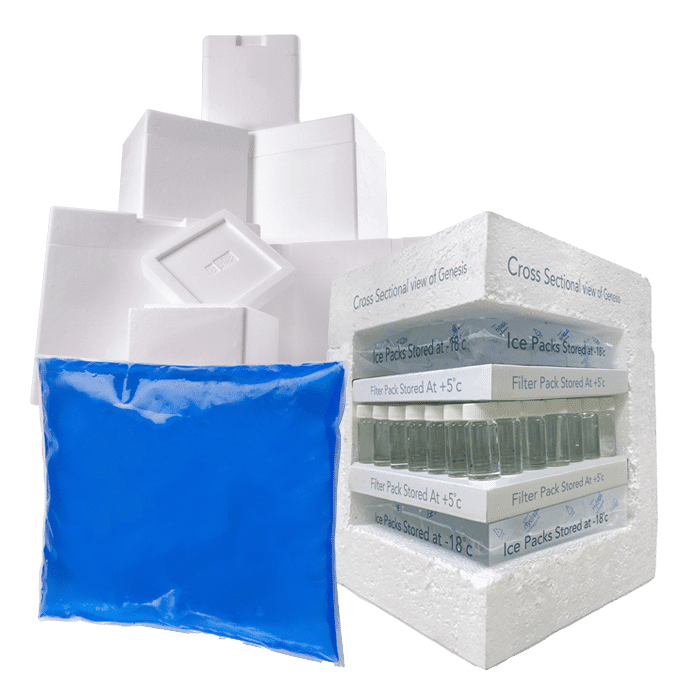
The insulation reduces heat transfer from the external environment, while coolant materials absorb heat entering the package. Together, these components create a controlled temperature environment that can remain stable for extended shipping durations.
Hydropac’s PharmaPac packaging systems are designed around this principle, combining insulated packaging structures with coolant technologies engineered for pharmaceutical distribution.
These systems are commonly used in shipments where reliability and validated performance are required but active refrigerated containers are impractical or cost prohibitive.


Packaging design as a risk management tool
Effective clinical trial packaging is rarely defined by insulation thickness alone. The reliability of a shipment depends on how the entire packaging system performs under real transport conditions.
Several design factors influence performance:
Insulation structure
The insulation layer determines how quickly heat can enter the package. Materials that trap still air or incorporate layered barriers help reduce thermal conductivity.
Coolant phase change behaviour
Coolant packs absorb heat while changing phase from solid to liquid. Selecting the correct coolant type and mass is essential for maintaining temperature stability over the planned shipping duration.
Hydropac’s coolant systems, including Ice Packs by Hydropac, are frequently integrated into pharmaceutical packaging configurations to stabilise internal conditions.
Pack-out configuration
The placement of coolant packs, product payload and insulation layers significantly affects temperature distribution inside the package.
Incorrect pack-out procedures can reduce the effective performance of an otherwise well-designed packaging system.
For this reason, validated packaging solutions include defined packing instructions and testing protocols to ensure repeatable performance.
Managing uncertainty in real-world logistics
Clinical trial shipments rarely follow perfectly predictable routes. Even well-planned transport lanes can encounter disruption.
To account for this uncertainty, packaging validation often uses worst-case temperature profiles during testing. These simulations expose packaging systems to sustained high temperatures to confirm that the internal environment remains within acceptable limits.
Designing packaging around worst-case scenarios ensures that shipments remain protected even when unexpected delays occur.
This approach reflects a broader principle in pharmaceutical logistics. Temperature-controlled packaging is not designed only for ideal conditions. It is designed to protect products when conditions are less predictable.
The growing complexity of clinical trial distribution
Clinical trial logistics is becoming increasingly complex as new therapies and research models emerge.
Biologic medicines and advanced therapies are more sensitive to environmental changes than traditional pharmaceuticals. At the same time, decentralised clinical trials are expanding, with medicines sometimes shipped directly to patients rather than central trial sites.
These trends place greater demands on packaging systems. Shipping solutions must maintain temperature stability while navigating longer routes and more varied distribution networks.
In this environment, temperature-controlled packaging is evolving from a simple container into a critical component of clinical trial infrastructure.
Conclusion
Clinical trial logistics requires a level of temperature control that few other supply chains demand. Even small deviations can compromise investigational products and disrupt research programmes.
Managing this risk depends on more than careful logistics planning. It requires packaging systems designed to maintain stable internal conditions despite delays, handling variability and environmental exposure.
Passive temperature-controlled packaging plays a key role in this process by combining insulation, coolant technology and validated pack-out configurations to protect sensitive materials during transport.
Hydropac’s approach focuses on designing packaging systems that support this reliability. By integrating insulated packaging and engineered coolant solutions, these systems help clinical supply teams maintain temperature stability across complex distribution networks.
In clinical trial shipping, temperature control is not just a technical detail. It is part of safeguarding the integrity of the research itself.