
A practical guide to temperature controlled packaging for 24–72 hour lanes
Temperature-sensitive goods rarely travel under ideal conditions. Food, pharmaceutical and healthcare shipments often move through parcel networks, courier hubs and last-mile delivery environments where refrigeration is not available. In these cases, packaging becomes the primary mechanism that protects product stability.
For many cold chain operations, the most common delivery profiles fall between 24 and 72 hours. These multi-day lanes are long enough for temperature risk to build, yet short enough that passive packaging systems remain the most practical solution.
Designing packaging that performs reliably across these lanes requires more than adding extra ice packs. Insulation design, coolant behaviour and pack-out configuration must work together to maintain thermal balance during transit. Hydropac’s approach to temperature-controlled packaging reflects this system-based philosophy, combining insulation and coolant solutions engineered to perform under real logistics conditions.
Custom chilled solutions for you
Hydropac offers every customer a customized solution for chilled and conditioned shipping. For example, we help a customer with limited freezing capacity to deliver gel packs frozen and ready to use, and we can manufacture almost all shapes and sizes of cooling elements. As a customer, you come first: we are here to help you.
Why 24–72 Hour Shipping Lanes Are Challenging
A shipment travelling through a courier network rarely experiences a single consistent environment. During a typical journey, a parcel may move through several stages:
- Storage at the fulfilment centre before dispatch
- Transport to regional courier hubs
- Sorting and redistribution across multiple depots
- Last-mile delivery routes and doorstep dwell time
Each of these stages introduces temperature variation. Parcels may move from refrigerated environments to ambient warehouses and then into delivery vehicles exposed to outdoor temperatures.
Seasonal conditions can amplify these fluctuations. Summer logistics hubs may reach temperatures well above 25°C, while winter transport conditions may approach freezing. For packaging systems designed to maintain chilled or frozen environments, these external pressures create continuous heat transfer into the parcel.
This is why packaging for 24–72 hour lanes must be engineered around thermal stability rather than theoretical hold time.
The Role of Passive Temperature Control
Most parcel-based cold chain shipments rely on passive temperature control systems. These systems maintain internal temperatures using insulation and phase change materials rather than powered refrigeration.
A typical passive packaging system includes three components:
- Insulated packaging to slow heat transfer
- Coolant packs to absorb incoming heat
- A defined pack-out configuration that distributes cold energy throughout the parcel
When designed correctly, this system creates a controlled thermal environment capable of protecting temperature-sensitive goods for multiple days.
Passive systems are widely used across sectors such as meal delivery, fresh food distribution and pharmaceutical logistics because they are scalable, cost-effective and compatible with standard courier networks.
Insulation: The First Line of Thermal Defence
In multi-day shipping lanes, insulation performance often determines how long a shipment remains within its required temperature range.
Effective insulation works by reducing heat transfer from the surrounding environment. Many modern insulation systems achieve this by trapping still air within structured materials. Still air slows the movement of heat energy and significantly reduces the rate at which the package warms.
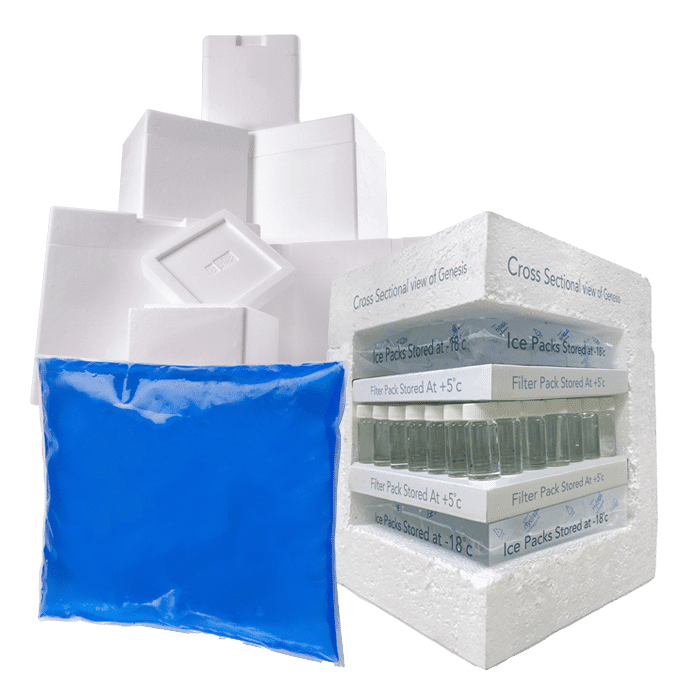
Packaging systems such as FreshPac insulated liners use engineered insulation structures to create controlled air pockets that improve thermal resistance.
This insulation layer extends the effectiveness of coolant packs by slowing the rate at which external heat reaches them. Without effective insulation, even large quantities of coolant will warm rapidly.
For shipments lasting 48 hours or longer, insulation design often becomes the limiting factor in packaging performance.
Choosing the Right Coolant for Multi-Day Lanes
Coolant packs provide the thermal buffer that protects products during transit. As frozen coolant begins to thaw, it absorbs heat energy and helps stabilise the internal temperature of the parcel.
The appropriate coolant depends largely on the temperature range required by the shipment.
Water-Based Ice Packs
Water-based coolant packs are widely used for chilled distribution because water freezes at 0°C. This phase change temperature aligns closely with the temperature range required to keep fresh food and many pharmaceutical products safely chilled.
Water-based packs are commonly used for:
- meal delivery logistics
- fresh ingredient distribution
- chilled grocery shipments
- pharmaceutical products requiring refrigerated conditions
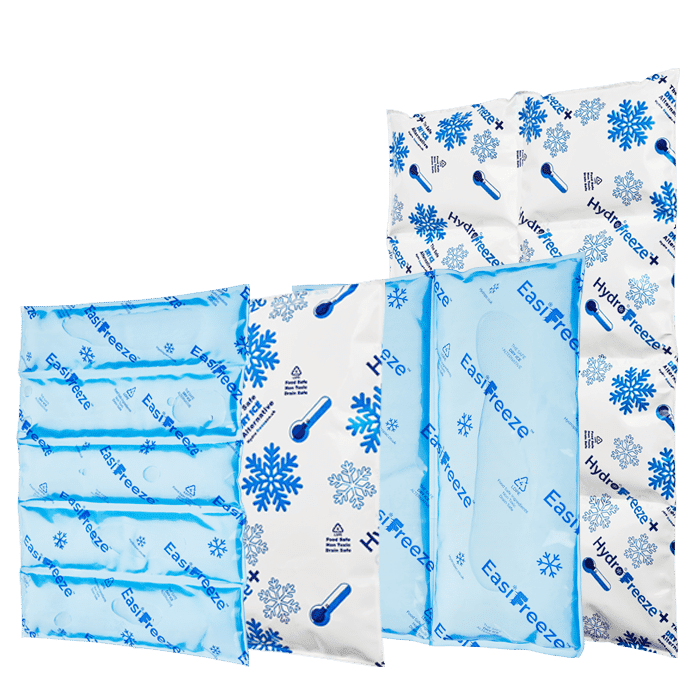
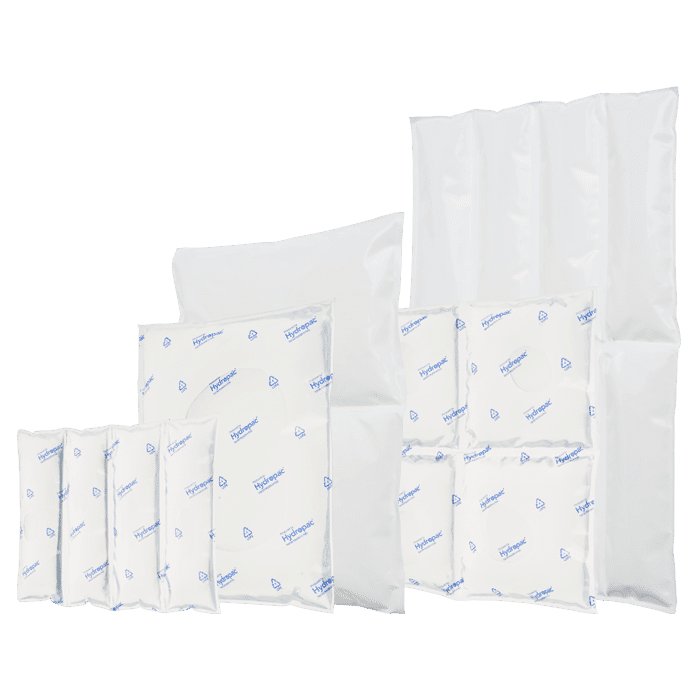
Hydropac manufactures a range of water and gel coolant packs designed for these applications within the Ice Packs by Hydropac product family.
These coolant packs are engineered to deliver predictable thaw behaviour and reliable sealing during large-scale distribution operations.
Phase Change Materials for Extended Lanes
For shipments requiring tighter temperature control or longer transit durations, phase change materials (PCM) may be used.
PCM coolants are engineered to transition between solid and liquid states at specific temperatures. This allows them to maintain a more stable thermal environment compared with standard ice packs in some applications.
For example, frozen distribution lanes may require coolants that operate below the freezing point of water, such as Hydropac’s HydroFreeze products designed for sub-zero shipping environments.
Selecting the correct coolant requires understanding both the target temperature range and the expected duration of the shipping lane.

Pack-Out Design and Thermal Balance
Even with strong insulation and appropriate coolant packs, packaging performance can vary depending on how the parcel is packed.
Pack-out configuration determines how cold energy is distributed inside the shipping box.
Key considerations include:
- the number of coolant packs used
- the placement of packs relative to the product
- airflow within the packaging system
- the thermal mass of the products being shipped
Incorrect pack placement can create uneven temperature zones inside the parcel. Products located far from coolant packs may warm more quickly during extended transit.
Validated pack-out patterns are often developed through testing to ensure shipments perform consistently across thousands of deliveries.
Operational Factors That Influence Packaging Performance
Cold chain packaging must also fit within the practical realities of fulfilment and logistics operations.
In high-volume distribution environments, packaging systems must support efficient handling while maintaining thermal performance.
Operational considerations often include:
- freezer capacity for preparing coolant packs
- packing speed within fulfilment centres
- warehouse storage conditions before dispatch
- courier handling during sorting and transit
A packaging system that performs well in controlled testing must also remain practical for teams packing hundreds or thousands of shipments per day.
Balancing thermal performance with operational efficiency is a key challenge when designing packaging for multi-day shipping lanes.
Regulatory Expectations for Temperature-Sensitive Shipments
Temperature-controlled shipments must comply with regulatory expectations depending on the type of product being transported.
For chilled food distribution, best practice guidelines in the UK recommend maintaining temperatures below approximately 5°C to ensure food safety throughout the supply chain.
Pharmaceutical shipments may have stricter temperature ranges defined by product stability data. In these cases, packaging systems must demonstrate the ability to maintain the required temperature range throughout the entire shipping duration.
These requirements make packaging design particularly important for lanes extending beyond 24 hours.
Conclusion
Temperature-controlled packaging for 24–72 hour shipping lanes must perform reliably under conditions that are rarely predictable. Courier handling, environmental exposure and delivery delays all introduce variables that influence thermal stability during transit.
Successful cold chain packaging systems combine insulation, coolant selection and pack-out design to maintain a balanced thermal environment throughout the delivery process.
Hydropac’s approach reflects this system-based perspective. By engineering coolant packs and insulation systems to work together, packaging solutions can perform consistently across the real conditions encountered in modern distribution networks.
For organisations shipping temperature-sensitive goods, the objective is not simply to add more coolant or thicker insulation. The goal is to design packaging systems that remain stable across the entire shipping journey.