
Reusable vs single-use insulated packaging in cost-to-serve modelling
Sustainability targets, rising transport costs and increasingly complex distribution networks have pushed cold chain logistics into a new conversation. Businesses are no longer evaluating packaging based only on material type or purchase price. Instead, they are asking a broader question: what does the packaging system cost the supply chain as a whole?
Reusable insulated containers are often presented as the sustainable solution. Single-use insulated packaging is sometimes viewed as a simpler but less progressive alternative. In reality, the comparison is rarely that straightforward.
For logistics teams managing temperature-sensitive shipments, the more useful question is not which packaging type sounds better. It is which system delivers the lowest cost-to-serve while maintaining reliable temperature control.
Custom chilled solutions for you
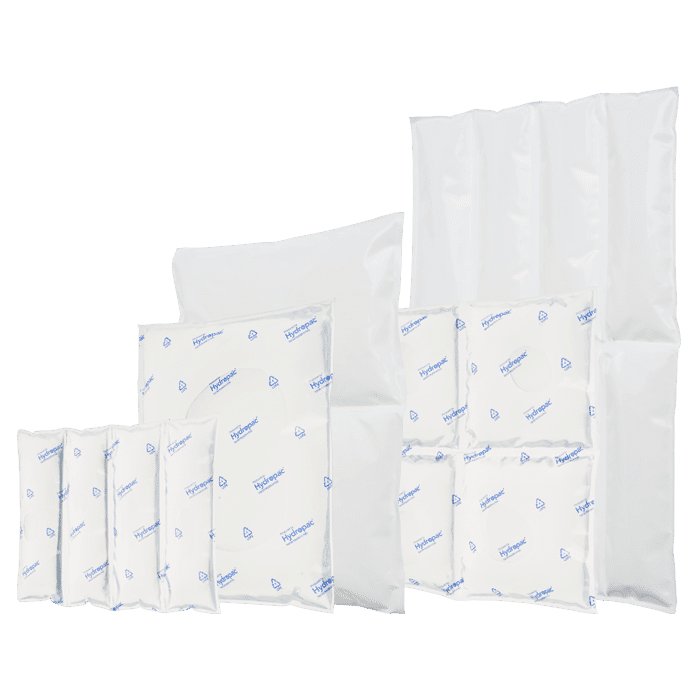
Hydropac offers every customer a customized solution for chilled and conditioned shipping. For example, we help a customer with limited freezing capacity to deliver gel packs frozen and ready to use, and we can manufacture almost all shapes and sizes of cooling elements. As a customer, you come first: we are here to help you.
Understanding cost-to-serve in cold chain packaging
Cost-to-serve modelling looks beyond the price of the packaging itself. It evaluates the total operational impact of a packaging system across the entire distribution process.
In temperature-controlled shipping, this can include several cost elements:
- packaging purchase cost
- warehouse storage requirements
- pack-out labour time
- shipping weight and dimensional freight costs
- return logistics for reusable containers
- inspection, cleaning or refurbishment processes
- disposal or recycling costs
When all of these factors are considered together, the most economical packaging solution is not always the one with the lowest unit price. It is the one that integrates most efficiently into the logistics system it supports.
The case for reusable insulated packaging
Reusable cold chain containers are designed to be used repeatedly across multiple shipments. These systems are typically constructed from durable insulation materials and are often combined with phase change materials or specialised coolant systems.
Their primary advantages include predictable insulation performance and reduced packaging waste across repeated use cycles.
Reusable packaging can be particularly effective in closed-loop logistics networks where containers can be returned to a central depot after delivery. In these environments, high reuse rates can reduce packaging cost per shipment and lower waste generation.
Reusable systems are commonly used in:
- pharmaceutical distribution between controlled facilities
- hospital supply networks
- laboratory and diagnostic logistics
When the supply chain structure supports container return and refurbishment, reusable packaging can deliver long-term operational benefits.
The operational complexity of reuse
While reusable packaging offers clear advantages in some supply chains, it also introduces operational requirements that are sometimes underestimated.
Reusable packaging systems require:
- container retrieval after delivery
- reverse logistics networks
- inspection and cleaning procedures
- asset tracking across shipments
Each of these steps adds cost and operational complexity.
For example, if containers must be transported long distances for refurbishment or redistribution, the transport and labour costs can offset the environmental and economic benefits of reuse.
In open distribution models such as parcel delivery networks or decentralised shipping routes, retrieving packaging assets may not be practical at all.
In these situations, reusable systems can become difficult to scale.
Why single-use insulated packaging remains widely used
Single-use insulated packaging continues to play an important role in cold chain logistics because it offers operational simplicity.
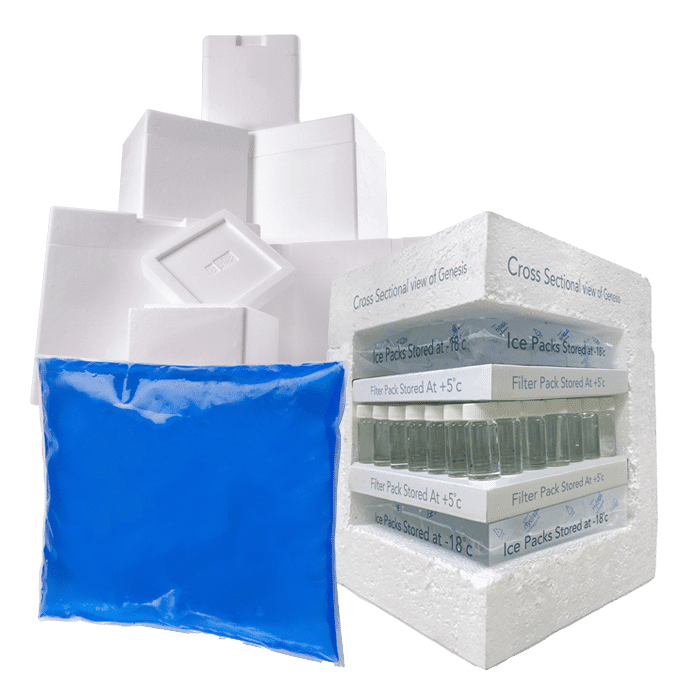
These packaging systems typically combine insulation materials, coolant packs and corrugated outer cartons to create a controlled thermal environment during transit.
Their key advantages include:
- no requirement for container return logistics
- predictable and repeatable pack-out processes
- compatibility with courier and parcel delivery networks
- flexibility for international shipments
Single-use packaging is therefore common in sectors such as meal delivery, chilled food distribution and direct-to-patient pharmaceutical shipments.
Hydropac’s FreshPac insulated packaging systems are designed around this type of distribution environment. Insulated liners create a thermal barrier inside standard shipping cartons, allowing businesses to build temperature-controlled shipments without relying on rigid containers.
When paired with engineered coolant packs, these systems can maintain stable internal temperatures across typical courier shipping windows.


Coolant systems and packaging performance
Insulation alone does not determine cold chain performance. Coolant packs play an equally important role in maintaining temperature stability.
Water-based ice packs, gel packs and phase change materials absorb heat entering the package during transit. The combination of coolant mass and insulation performance determines how long the internal temperature remains within the required range.
Hydropac’s Ice Packs range is designed to work alongside insulated packaging systems to stabilise internal conditions during chilled or frozen transport.
The interaction between insulation structure, coolant type and pack-out configuration is what ultimately determines packaging performance.
For this reason, cold chain packaging decisions are increasingly evaluated as complete system designs rather than individual packaging materials.
Sustainability considerations in packaging decisions
Sustainability has become a major influence on packaging strategies across logistics industries. Many organisations are under pressure to reduce waste and lower the carbon impact of their supply chains.
Reusable packaging can reduce waste when containers are used across many shipping cycles. However, environmental benefits depend on factors such as return transport distances and refurbishment processes.
Single-use packaging can also improve sustainability outcomes when materials are lightweight, recyclable or designed to minimise transport weight.
For example, liner-based insulation systems often reduce shipping volume and warehouse storage requirements, which can lower transport emissions.
The most sustainable packaging decision therefore depends on how the packaging performs across the entire logistics system, not simply whether it is reusable.
Choosing the right packaging model
Cold chain packaging decisions are rarely binary. Many logistics networks now adopt hybrid strategies that combine reusable and single-use packaging depending on shipment type.
Reusable containers may be used for predictable distribution lanes between controlled facilities. Single-use insulated packaging may be used for parcel shipments or routes where packaging recovery is impractical.
When evaluating packaging models, companies often focus on several practical questions:
- How easily can packaging be recovered after delivery?
- What storage capacity is available in the warehouse?
- How frequently are shipments dispatched?
- How consistent are transport routes and delivery times?
- What level of temperature protection is required?
These operational considerations often have a greater impact on cost-to-serve than the packaging material itself.
Conclusion
The debate between reusable and single-use insulated packaging is often framed as a sustainability choice. In reality, it is primarily a logistics decision.
Reusable packaging systems can deliver strong performance and reduced waste when supply chains support container return and refurbishment. In more open distribution networks, single-use packaging systems may provide greater operational efficiency and lower total cost.
For temperature-controlled logistics, the most effective approach is to evaluate packaging as part of a complete cold chain system. Insulation design, coolant configuration and pack-out procedures all contribute to the reliability of the shipment.
Hydropac’s packaging solutions are designed with this system perspective in mind. By combining insulated packaging formats and engineered coolant technologies, these systems support consistent temperature control across a wide range of cold chain distribution environments.
In modern logistics, the best packaging decision is rarely about whether a container can be reused. It is about whether the entire system performs reliably within the realities of the supply chain.