
Insulated shipping boxes vs thermal liners in performance testing
Temperature-controlled shipping is often discussed in simple terms: insulated box, ice packs, and a delivery window. In reality, cold chain packaging decisions are rarely that straightforward.
Businesses shipping chilled food, pharmaceuticals or temperature-sensitive products must balance performance, operational practicality and sustainability. One of the most common packaging questions in these sectors is whether to use rigid insulated shipping boxes or thermal liners placed inside corrugated cartons.
Both approaches are widely used across cold chain logistics. Both can maintain temperature under the right conditions. The real question is how they perform under realistic testing scenarios and operational pressures.
Understanding how insulation systems behave during performance testing is therefore essential when selecting the right packaging format for a given distribution model.
Custom chilled solutions for you
Hydropac offers every customer a customized solution for chilled and conditioned shipping. For example, we help a customer with limited freezing capacity to deliver gel packs frozen and ready to use, and we can manufacture almost all shapes and sizes of cooling elements. As a customer, you come first: we are here to help you.
Understanding the two packaging systems
Rigid insulated shipping boxes
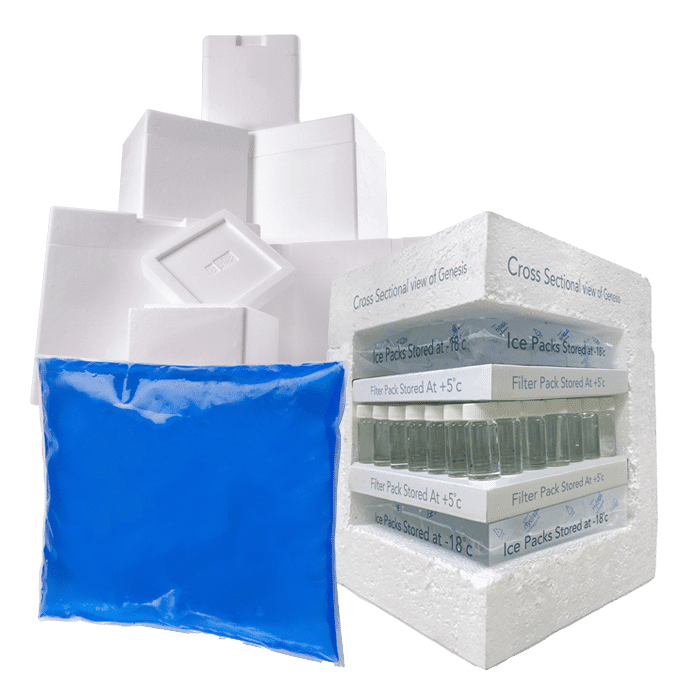
Rigid insulated containers are purpose-built packaging units where insulation is integrated directly into the structure of the box. The most common example is the EPS insulated shipping box, although other materials such as polyurethane foam and moulded fibre insulation are also used.
These containers are designed to provide consistent insulation thickness and predictable thermal resistance. Because the insulation forms part of the box itself, internal temperature stability is influenced primarily by insulation thickness, coolant load and ambient conditions.
Rigid systems are often used in situations where:
- shipment duration exceeds 48 hours
- precise temperature ranges must be maintained
- packaging validation is required for regulatory compliance
They are widely used in pharmaceutical logistics and specialist cold chain shipments where performance validation is critical.
However, rigid insulation systems introduce operational considerations. They require more storage space, increase volumetric shipping weight and can be less efficient to handle in high-volume packing environments.
Thermal liner systems
Thermal liners take a different approach to insulation. Instead of forming the box itself, liners are placed inside a standard corrugated carton to create an insulated chamber around the payload.
These liners may be constructed from several materials including reflective bubble insulation, multi-layer films, natural fibres or structured paper insulation. Their primary function is to slow heat transfer between the outside environment and the product inside the package.
Thermal liner systems are widely used in chilled food distribution, meal delivery logistics and other parcel-based cold chain applications.
Because they can be stored flat before use, liner systems offer clear operational advantages. Storage density is significantly higher, and packaging preparation can be faster during peak dispatch periods.
Hydropac’s FreshPac insulated liner systems are designed around this operational model, allowing businesses to create insulated shipping environments using standard cardboard cartons.
What performance testing actually measures
Cold chain packaging is rarely evaluated purely by material specifications. Performance testing focuses on how a complete packaging system behaves under controlled environmental conditions.
Most testing is carried out in climate chambers where packaging is exposed to defined temperature profiles that simulate transport environments. Internal temperature sensors monitor how long the system can maintain a specified temperature range.
Testing protocols commonly replicate scenarios such as:
- extended exposure to warm ambient temperatures
- temperature fluctuations during handling and transit
- worst-case courier delivery conditions
Industry test standards such as ISTA thermal profiles are frequently used to simulate these conditions.
The key outcome is not simply whether the packaging works, but how consistently it maintains temperature stability throughout the shipping window.
Insulation material is only one variable
A common misconception in cold chain packaging comparisons is that insulation material alone determines performance.
In practice, temperature stability depends on several interacting factors:
- insulation structure
- coolant pack configuration
- internal air volume
- product thermal mass
- external temperature exposure
Still air trapped within insulation layers plays a critical role in slowing heat transfer. This principle is visible in many modern liner designs where structured air pockets or multi-layer barriers help create an insulating effect.
When tested under controlled conditions, well-designed liner systems can perform surprisingly well when combined with the correct coolant load.
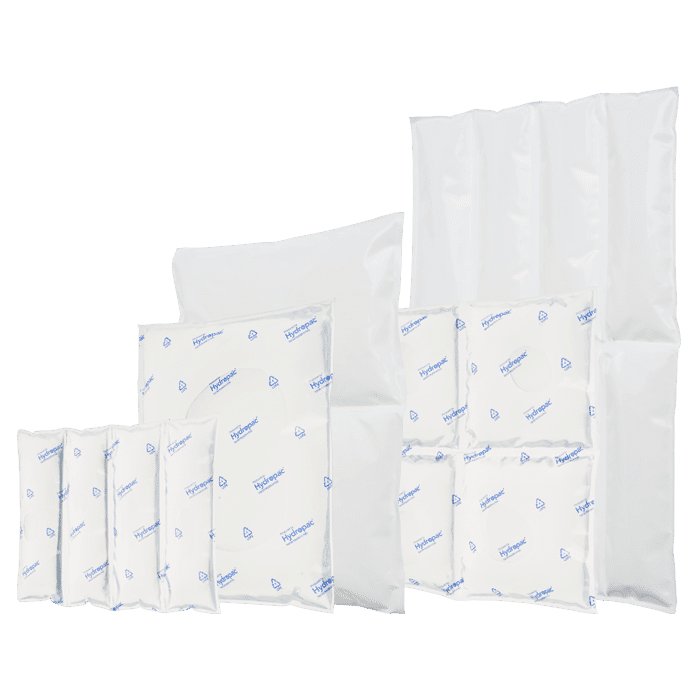
Hydropac’s Ice Packs by Hydropac range is frequently used alongside insulated liners to create passive cooling systems capable of maintaining chilled environments during distribution.


Transit duration and packaging choice
One of the most practical considerations when comparing packaging formats is expected transit duration.
Shorter courier deliveries often favour liner systems because they provide sufficient insulation while keeping packaging lightweight and operationally efficient.
Longer shipping windows may require thicker insulation or rigid containers that provide higher thermal resistance.
A typical cold chain decision framework may look like this:
- Under 24 hours: liner systems combined with ice packs often provide adequate protection
- 24–48 hours: thicker liners or multi-layer insulation systems may be required
- 48–72 hours: rigid insulated containers may offer additional stability
However, this is not a strict rule. Performance ultimately depends on pack-out design and coolant configuration rather than container type alone.
Operational performance often decides the outcome
Packaging comparisons frequently focus on laboratory testing results. In practice, operational considerations often carry equal weight.
Distribution environments introduce variables that laboratory tests cannot fully replicate:
- packing speed during peak demand
- warehouse storage constraints
- courier handling conditions
- fluctuating dispatch schedules
Thermal liners can offer advantages in these environments because they reduce storage volume and simplify pack-out processes. A pallet of flat-packed liners can replace large quantities of rigid insulated boxes, freeing warehouse capacity.
For companies shipping thousands of parcels per week, this operational efficiency becomes a significant factor in packaging selection.
Sustainability considerations
Environmental impact has become an increasingly important element of packaging decisions.
Traditional EPS insulated containers offer reliable thermal performance but can present recycling challenges depending on local waste infrastructure.
By contrast, liner systems constructed from recyclable paper or fibre materials can align more easily with sustainability initiatives.
Hydropac’s insulated liner systems focus on materials that balance thermal performance with recyclability, allowing companies to maintain cold chain stability while reducing packaging waste streams.
Sustainability discussions in cold chain packaging are rarely straightforward. The environmental cost of product spoilage can exceed the impact of packaging itself. For this reason, performance reliability remains the primary priority.
The comparison that matters most
Comparing insulated boxes and thermal liners purely as materials often leads to the wrong conclusion.
Cold chain packaging should instead be evaluated as a complete system, where insulation, coolant packs and pack-out configuration work together to maintain temperature stability.
Rigid containers can deliver strong thermal resistance but introduce operational constraints. Liner systems can offer greater flexibility but rely on careful system design.
The most reliable packaging decisions come from performance testing under realistic conditions, rather than assumptions about insulation thickness or container type.
Conclusion
The choice between insulated shipping boxes and thermal liners is not simply a material decision. It is a system design question.
Performance testing consistently shows that temperature stability depends on the interaction between insulation, coolant packs and shipment conditions. A well-designed liner system can perform effectively in many cold chain environments, while rigid insulated containers remain valuable for longer-duration shipments.
Understanding the realities of distribution networks, warehouse operations and transit conditions is essential when selecting packaging formats.
Hydropac’s approach focuses on designing complete passive cold chain systems, combining insulated packaging and engineered coolant solutions to support reliable temperature control across a wide range of shipping profiles.
In cold chain logistics, the most effective packaging is rarely the one with the thickest insulation. It is the one designed to perform consistently in the real world.