
Gel vs water ice packs in temperature controlled shipping
Temperature-controlled shipping relies on coolant packs to absorb heat and stabilise the internal environment of a shipment. Whether transporting fresh food, pharmaceutical products or laboratory materials, the coolant inside a packaging system plays a central role in maintaining product quality during transit.
Two of the most commonly used coolant formats are water-based ice packs and gel ice packs. At first glance they appear similar. Both are frozen before shipment and placed inside insulated packaging to slow temperature rise.
However, their thermal behaviour, operational characteristics and manufacturing considerations are different. Understanding those differences helps cold chain operators choose the most appropriate solution for their shipping conditions.
For organisations shipping temperature-sensitive goods through parcel networks or non-refrigerated transport, coolant choice can influence both temperature stability and operational efficiency.
Custom chilled solutions for you
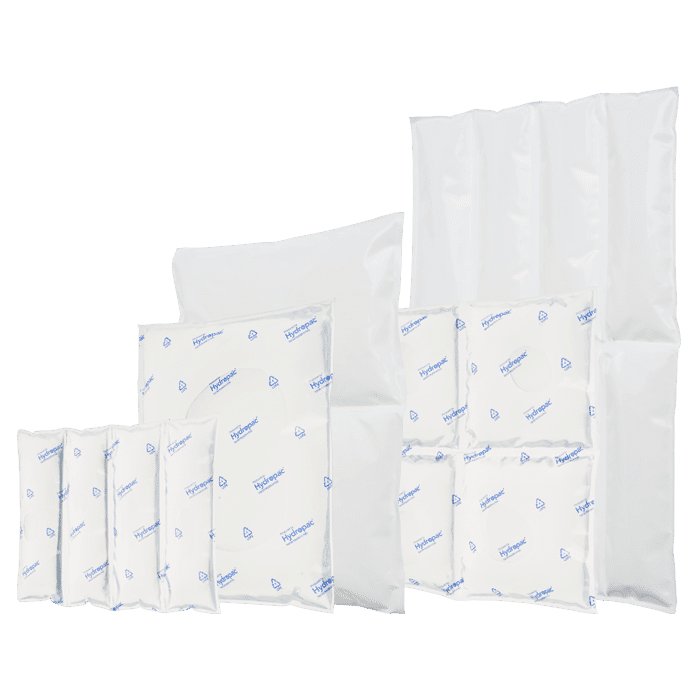
Hydropac offers every customer a customized solution for chilled and conditioned shipping. For example, we help a customer with limited freezing capacity to deliver gel packs frozen and ready to use, and we can manufacture almost all shapes and sizes of cooling elements. As a customer, you come first: we are here to help you.
The role of coolant packs in passive cold chain packaging
Most meal deliveries, chilled food shipments and many pharmaceutical parcels travel through standard courier networks rather than refrigerated vehicles. In these situations temperature control relies on passive packaging.
Passive systems typically combine:
- insulated liners or boxes
- coolant packs
- a defined pack-out configuration
The coolant pack absorbs incoming heat energy as it transitions from frozen to liquid. During this phase change it stabilises the internal environment of the package.
The rate at which the coolant absorbs heat, and the temperature at which this phase change occurs, determine how effectively the shipment remains within its target temperature range.
This is where the differences between gel and water-based coolant packs become important.
Water ice packs and their thermal behaviour
Water-based ice packs rely on one of the most widely understood physical processes in thermal science. Water freezes at 0°C, and during the melting process it absorbs a significant amount of heat energy.
This property makes water particularly effective for maintaining chilled conditions.
When placed inside an insulated shipping box, water ice packs absorb incoming heat as the ice slowly melts. Because the phase change occurs at 0°C, the coolant helps stabilise the environment within the temperature range required for chilled food distribution.
Water-based packs are commonly used in applications such as:
- meal delivery and meal kits
- fresh ingredient distribution
- chilled grocery shipments
- temperature-controlled food logistics
In operational environments, water-based packs often freeze faster than gel packs. This can simplify freezer preparation in high-volume fulfilment centres.
Hydropac manufactures a range of water-based coolant packs designed for chilled distribution as part of the Ice Packs range.
These packs are engineered for consistent thermal behaviour and reliable seal integrity, supporting food and pharmaceutical cold chains where predictable performance is essential.
Gel ice packs and how they differ
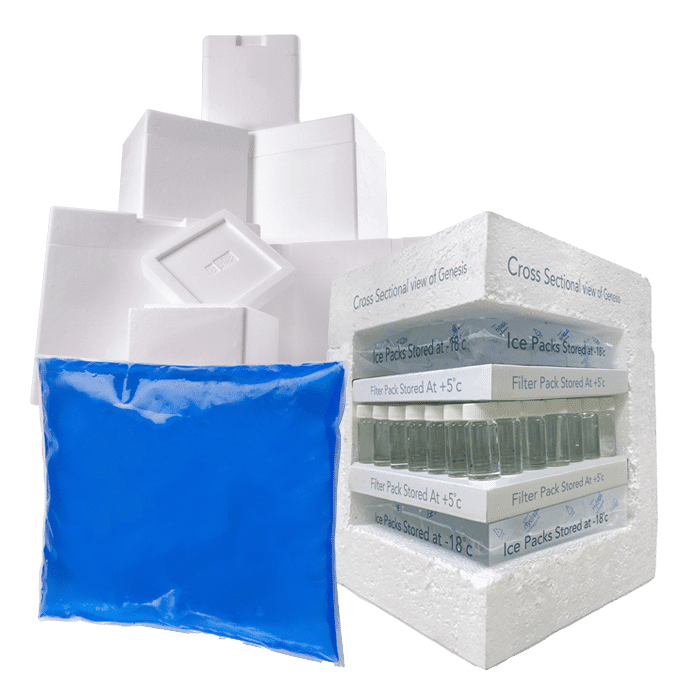
Gel ice packs use coolant formulations that include thickening agents. These polymers increase the viscosity of the coolant and allow the pack to retain structure even when thawing begins.
As a result, gel packs typically maintain a semi-solid consistency during melting rather than forming free liquid water.
This structural behaviour can influence how the pack handles during transport and unpacking. For example, gel packs may be easier to handle after thawing because the coolant does not flow freely.
However, gel formulations also introduce additional variables.
Gel packs may require longer freeze preparation times, depending on the thickness and composition of the coolant. The exact thermal behaviour can also vary between manufacturers because gel formulations are not standardised.
This means performance can differ depending on the design and production quality of the pack.


Why insulation often matters more than coolant type
Discussions about coolant packs often focus on the coolant material itself. In practice, the insulation system surrounding the coolant has an equally significant influence on performance.
Even the most effective coolant pack will lose thermal energy quickly if the surrounding packaging allows heat to enter the system.
Modern cold chain packaging therefore depends on the interaction between several components:
- coolant packs
- insulation materials
- pack-out configuration
- shipment duration
- external temperature exposure
For example, insulated liner systems such as FreshPac packaging solutions use structured insulation materials that trap still air to reduce heat transfer.
When coolant packs are combined with well-designed insulation and correct pack placement, the overall packaging system becomes far more effective at maintaining stable temperatures.
This system-level approach often produces better results than focusing on coolant composition alone.
Operational considerations when choosing coolant packs
Cold chain operators often evaluate coolant options based on practical operational requirements.
Key factors include:
- Freeze preparation time – Water-based packs typically freeze faster than gel packs, which can improve operational efficiency in high-volume fulfilment environments.
- Handling behaviour – Gel packs retain structure during thawing, while water packs become liquid once fully melted.
- Consistency of formulation – Water-based coolants rely on a simple and well understood phase change process, while gel formulations can vary between manufacturers.
- Scalability of production – Simpler coolant compositions can sometimes support more consistent large-scale manufacturing.
These operational considerations can be just as important as thermal performance when selecting coolant packs for a distribution system.
The question that matters most
When comparing gel and water ice packs, many discussions focus on which coolant type is “better”.
In reality, the more relevant question is how the entire packaging system performs during a real shipment.
Two shipments using identical coolant packs may produce very different results depending on insulation design, pack placement and external conditions.
A packaging system designed around predictable thermal behaviour often delivers more reliable results than one focused on individual component specifications.
For organisations shipping food, pharmaceuticals or other temperature-sensitive products, the goal is not simply to freeze a pack and place it inside a box. The goal is to create a packaging system that maintains stability across thousands of deliveries under changing conditions.
Conclusion
Both gel and water ice packs play important roles in temperature-controlled shipping. Each coolant type has characteristics that may suit particular applications depending on shipping duration, operational processes and packaging design.
Water-based packs offer predictable phase change behaviour and operational simplicity, making them widely used in chilled food distribution and meal delivery logistics. Gel packs may provide structural advantages in some handling scenarios but can introduce variability depending on formulation and freeze preparation.
In practice, the most reliable cold chain systems are designed around integrated packaging performance rather than individual components.
Hydropac’s approach reflects this principle by combining coolant packs with insulated packaging systems designed to work together in real distribution environments. By focusing on system behaviour rather than isolated materials, cold chain operators can achieve the consistency required to protect temperature-sensitive products throughout transit.