
How to choose the right ice packs for meal delivery
Meal delivery services depend on reliable cold chain packaging. Ingredients, prepared meals, and fresh produce must remain within safe temperature ranges from the moment a parcel leaves the fulfilment centre until it reaches the customer’s doorstep.
In most cases these deliveries travel through standard parcel networks rather than refrigerated transport. That means temperature stability is largely determined by the packaging system itself. Ice packs, insulation, and pack-out configuration must work together to maintain chilled conditions for 24 to 48 hours, sometimes longer.
Choosing the right ice pack therefore involves more than selecting a frozen coolant. It requires understanding how coolant behaviour interacts with insulation performance and real delivery conditions.
For meal delivery operators, the decision directly influences product quality, operational efficiency, and customer trust.
Custom chilled solutions for you
Hydropac offers every customer a customized solution for chilled and conditioned shipping. For example, we help a customer with limited freezing capacity to deliver gel packs frozen and ready to use, and we can manufacture almost all shapes and sizes of cooling elements. As a customer, you come first: we are here to help you.
Understanding the role of ice packs in meal delivery
Ice packs act as the primary temperature control mechanism in passive cold chain packaging. Their role is to absorb incoming heat during transit, slowing the rate at which the internal temperature of a shipment rises.
When frozen coolant begins to thaw, it undergoes a phase change. During this process the pack absorbs energy from the surrounding environment, helping maintain stable internal temperatures.
However, not all ice packs behave the same once placed inside a shipping system. Differences in coolant composition, freeze preparation, and packaging design can significantly affect performance.
For meal delivery brands shipping chilled food, the goal is typically to keep internal parcel temperatures below 5°C throughout the delivery window.
Achieving that reliably depends on selecting the right coolant type and combining it with an appropriate insulated packaging system.
Coolant types used in meal delivery packaging
Ice packs used in temperature-controlled shipping generally fall into three categories.
Water-based ice packs
Water-based packs are widely used for chilled food distribution. Because water freezes at 0°C, it aligns well with the temperature range required to keep perishable food products safely chilled.
Advantages of water-based packs include predictable freeze and thaw behaviour, faster freeze preparation compared with many gel formulations, and a simpler coolant composition.
Many food distribution systems rely on water-based packs because they provide consistent thermal behaviour when used with the correct insulation.
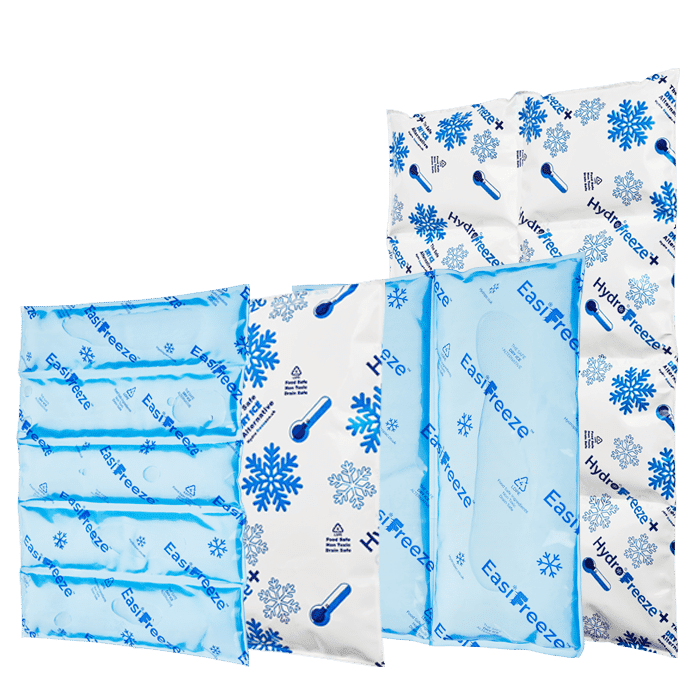
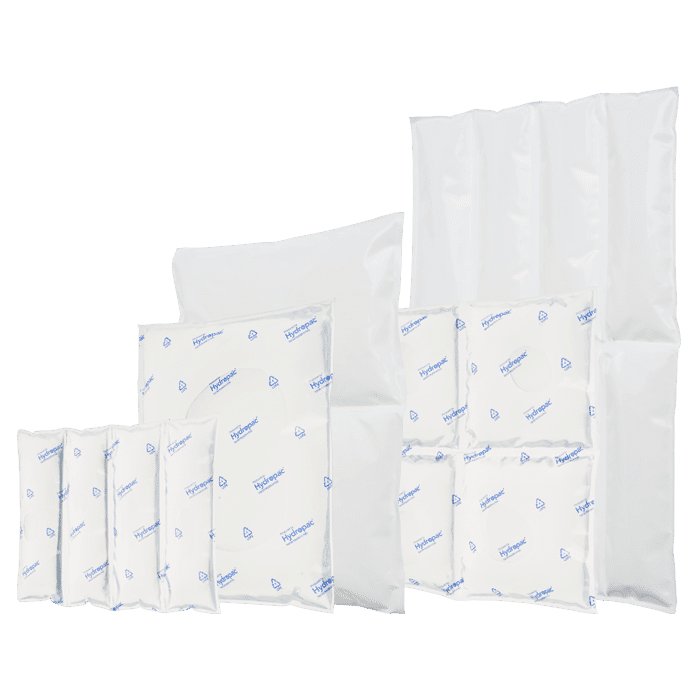
Hydropac manufactures water-based coolant packs designed specifically for food logistics. These products are part of the Ice Packs range used across meal delivery and chilled distribution environments.
Gel ice packs
Gel packs contain thickened coolant formulations that can alter thaw behaviour compared with pure water. In some situations they may retain structure for longer once thawing begins.
However, gel packs also introduce additional considerations such as longer freeze preparation times and variability between gel formulations from different manufacturers.
In practical distribution environments, the insulation system surrounding the pack often has a greater influence on temperature stability than the coolant formulation itself.
Phase change materials for frozen shipments
When shipping frozen meals or products that must remain below freezing, specialised coolants are required.
Phase change materials designed for sub-zero performance can maintain temperatures well below standard water freezing points. These solutions are typically used in frozen distribution where maintaining deep freeze conditions is critical.
Factors that influence ice pack performance
Choosing the correct ice pack requires considering how the entire packaging system behaves during transit.
Delivery duration
The first factor is the expected delivery window. Many meal delivery companies design packaging around 24 to 48 hour transit lanes, but courier networks introduce variables such as sorting delays and weather exposure.
Ice packs should therefore be selected based on performance under realistic temperature profiles rather than ideal laboratory conditions.
Insulation system
Coolant packs cannot maintain temperature on their own. Their effectiveness depends heavily on the insulation surrounding them.
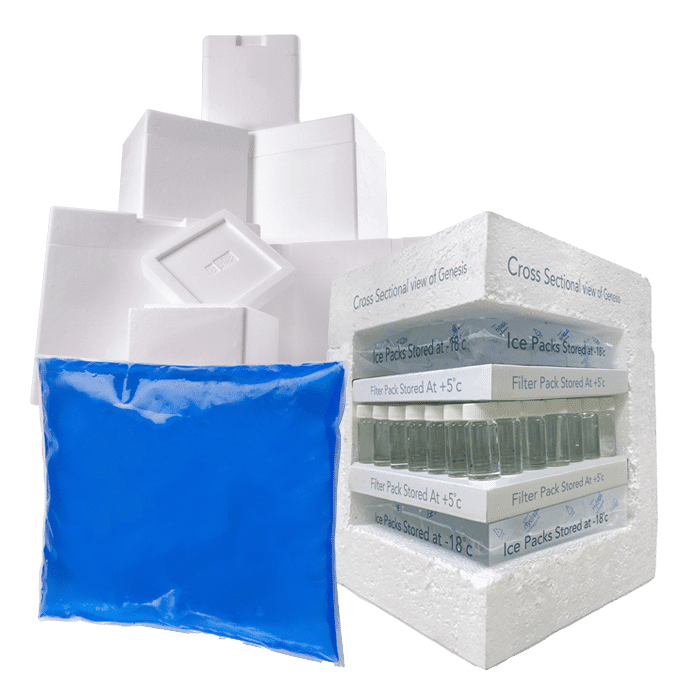
Insulated liner systems such as FreshPac packaging solutions use structured insulation layers that trap still air, reducing heat transfer into the parcel.
When paired with correctly sized coolant packs, these systems can maintain stable internal temperatures across typical meal delivery routes.
Pack quantity and placement
The number of ice packs used and their placement inside the shipping box can significantly affect thermal performance.
Incorrect pack placement may lead to uneven cooling or temperature gradients inside the parcel. Many fulfilment operations develop validated pack-out patterns to ensure consistent results across large shipment volumes.
Freeze preparation
Freeze preparation is another operational factor often overlooked during packaging selection.
Water-based ice packs typically freeze faster than thicker gel packs. In high-volume fulfilment environments, this difference can influence freezer capacity requirements and packing efficiency.

Hygiene and manufacturing standards
Ice packs used in meal delivery shipments sit close to food packaging. Although coolant packs are sealed, leakage or damage during transport can expose their contents.
For this reason, coolant hygiene and manufacturing standards should be considered when selecting a supplier.
Some manufacturers apply additional safeguards such as filtered production water, UV treatment processes, and independent microbiological testing for indicator organisms including:
- E. coli
- Enterococci
- Coliform bacteria
These are commonly used markers in public health water quality testing.
If coolant packs are placed alongside fresh food products, it is reasonable to ask how the coolant itself is verified during production.
Temperature performance is essential, but the standards behind the coolant material itself also contribute to responsible cold chain packaging.
Why packaging systems outperform individual components
One of the most important lessons in cold chain packaging is that performance rarely comes from a single product.
Temperature stability depends on the interaction between several factors:
- coolant packs
- insulation materials
- box construction
- pack-out configuration
- external temperature exposure
A high-performance coolant cannot compensate for poor insulation, just as an advanced liner cannot perform without sufficient coolant mass.
Hydropac’s packaging approach focuses on integrated systems, combining insulation and coolant solutions designed to work together. This reduces variability in real delivery environments where conditions are rarely perfectly controlled.
Choosing the right ice pack for your operation
For meal delivery operators, ice pack selection ultimately comes down to understanding how packaging performs under real logistics conditions.
The right coolant solution should provide predictable thermal behaviour, efficient freeze preparation, and compatibility with the insulation system used in fulfilment operations.
Equally important is the manufacturing quality behind the coolant packs themselves. Ice packs are a small component of the overall packaging system, but they sit at the centre of temperature control and food protection during delivery.
In temperature-controlled logistics, reliability rarely comes from complexity. It comes from choosing packaging components that behave consistently every time a shipment leaves the warehouse.
For meal delivery brands shipping thousands of parcels each week, that consistency is what protects both product quality and customer trust.