
How to Accurately Model Cold Chain Performance Using Real Thermal Data
Reliable cold chain logistics depend on more than high quality packaging or efficient route planning. True performance comes from understanding how products, coolants and insulated systems behave under real temperature conditions. As supply chains grow more complex, organisations face the challenge of predicting how shipments will perform across multiple environments, handling points and storage stages. Laboratory tests provide valuable insights, but they rarely capture the full picture.
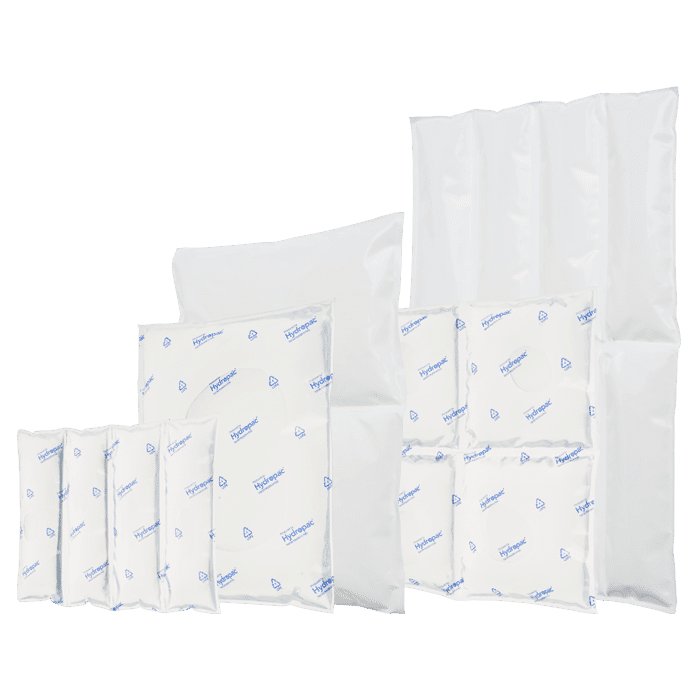
Hydropac works with food, pharmaceutical and healthcare sectors that rely on accurate temperature control. Our water based ice packs, HydroFreeze coolants and validated FreshPac and PharmaPac systems are regularly tested in climate chambers and real world distribution settings. This combination of controlled testing and practical data collection reflects a growing industry trend. To model cold chain performance effectively, companies now turn to real thermal data to produce simulations that match actual conditions rather than theoretical assumptions.
Custom chilled solutions for you
Hydropac offers every customer a customized solution for chilled and conditioned shipping. For example, we help a customer with limited freezing capacity to deliver gel packs frozen and ready to use, and we can manufacture almost all shapes and sizes of cooling elements. As a customer, you come first: we are here to help you.
Why Real Thermal Data Matters in Cold Chain Modelling
Cold chain systems are influenced by many factors that cannot be replicated perfectly in a laboratory. Door openings, loading delays, ambient spikes, vehicle idling and mixed load configurations all create dynamic temperature conditions. Real thermal data provides insight into how shipments behave in these variable environments and allows organisations to refine packaging, route planning and coolant selection with far greater accuracy.
Hydropac supports this need through consistent coolant manufacturing and validated packaging families such as FreshPac and PharmaPac. Because these products are designed with predictable freezing and thawing characteristics, they integrate well into data driven modelling where repeatability is essential.
Temperature Mapping as the Foundation of Accurate Modelling
Temperature mapping is the first step for any organisation seeking to understand its cold chain. This involves placing data loggers in storage areas, transport vehicles and packaging systems to identify warm zones, cold spots and fluctuations over time.
GDP guidelines for pharmaceutical distribution require temperature mapping during qualification of storage and transport equipment. Accurate models depend on this mapping because simulation tools need a realistic thermal environment as input. Without such data, even a high performance packaging system can be misconfigured or used outside its intended profile.
Hydropac’s PharmaPac systems are often used in settings where mapping is mandatory, which means their performance can be compared directly with real conditions rather than assumed ones.
Using Climate Chamber Testing to Create Predictive Profiles
Climate chambers are essential for establishing baseline performance. Manufacturers and logistics teams test packaging systems in controlled summer and winter profiles to understand how long they maintain the required temperature range.
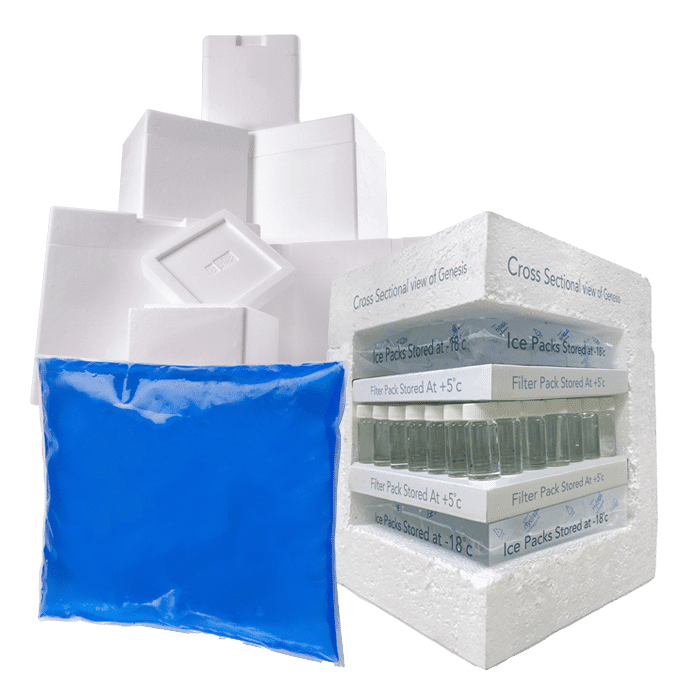
These profiles provide a starting point, but real thermal data is needed to bridge the gap between a chamber scenario and real logistics conditions. FreshPac systems for food and e-commerce shipments, for example, are tested at defined profiles before they are validated in real routes with data loggers. This combined approach gives both performance certainty and confidence that the pack out will hold up when exposed to inconsistent ambient temperatures.
Integrating Coolant Characteristics into Thermal Models
Thermal models depend on accurate inputs, including the properties of the coolant itself. For water based ice packs and HydroFreeze formulations, key factors include latent heat values, phase change temperature, mass of coolant, pocket structure and thermal conductivity. Packs that freeze consistently and exhibit predictable thaw curves enable more reliable simulations.
Modelling tools use these inputs to calculate how long a shipment can remain in its target zone under different conditions. Hydropac’s consistent manufacturing processes, including seal through water technology, provide coolants with repeatable behaviour, which improves the accuracy of thermal predictions.


Building a Complete Model Using Route Data
Effective cold chain modelling requires more than product performance information. It must also incorporate the thermal realities of the distribution route. This typically includes:
- Ambient temperature variations across the delivery lane
- Handling times during loading and unloading
- Duration of vehicle stops
- Thermal inertia of the product being shipped
- Insulation performance of the chosen packaging system
Real data loggers placed inside test shipments create a full thermal profile of the route. When a model incorporates these details, simulations become realistic enough to support decisions about coolant quantity, pack out configuration and packaging selection.
Packaging as a Critical Variable in Thermal Simulation
Packaging plays an active role in temperature control and is therefore a core variable in any thermal model. Insulated liners such as Recycle-Air and EnviroCool influence the rate of heat transfer and determine how long a coolant can maintain the required threshold. The design and placement of coolants inside the pack out also shape the internal temperature gradients.
By combining the performance data of Hydropac coolants with measured insulation values and real ambient conditions, organisations can produce models that reflect the true behaviour of the full system rather than its components in isolation. This holistic view allows businesses to optimise for sustainability, cost, reliability and compliance.
Engineering Perspectives on Thermal Modelling
Cold chain modelling relies on basic heat transfer principles, including conduction through packaging materials, convection around the outer surfaces and radiative heat gain during exposure to warm environments. Numerical simulations apply these principles to predict how fast heat enters a system and how quickly a coolant will absorb or dissipate it.
When these simulations are calibrated with real thermal data, results become reliable enough to support compliance efforts under GDP and ISO standards. For sensitive materials such as pharmaceuticals and biological samples, this precision is essential. PharmaPac systems, for instance, are often used in scenarios where validated data and modelling are required to demonstrate that temperature conditions remain within the permitted range.
Conclusion
Accurate modelling of cold chain performance depends on understanding how packaging systems behave in real conditions rather than idealised environments. Real thermal data provides the insight needed to predict temperature stability across complex routes and variable handling stages. By combining temperature mapping, climate chamber testing and route specific data, organisations can build models that closely reflect operational reality.
Hydropac’s consistent coolant formulations and validated packaging families, including FreshPac and PharmaPac, support this data driven approach. Their predictable freeze and thaw characteristics make it possible to model thermal performance with confidence, allowing teams to refine pack outs, improve energy efficiency and strengthen regulatory compliance. As cold chain demands continue to rise, the ability to model performance accurately will remain central to protecting product integrity and maintaining high operational standards.